Mormonism Explained
Why Did the Joseph Smith Assassination Happen?
On June 27, 1844, Joseph Smith and his brother Hyrum Smith were killed by a mob while being held in Carthage Jail, an event remembered by Latter-day Saints as a martyrdom that culminated years of escalating conflict.
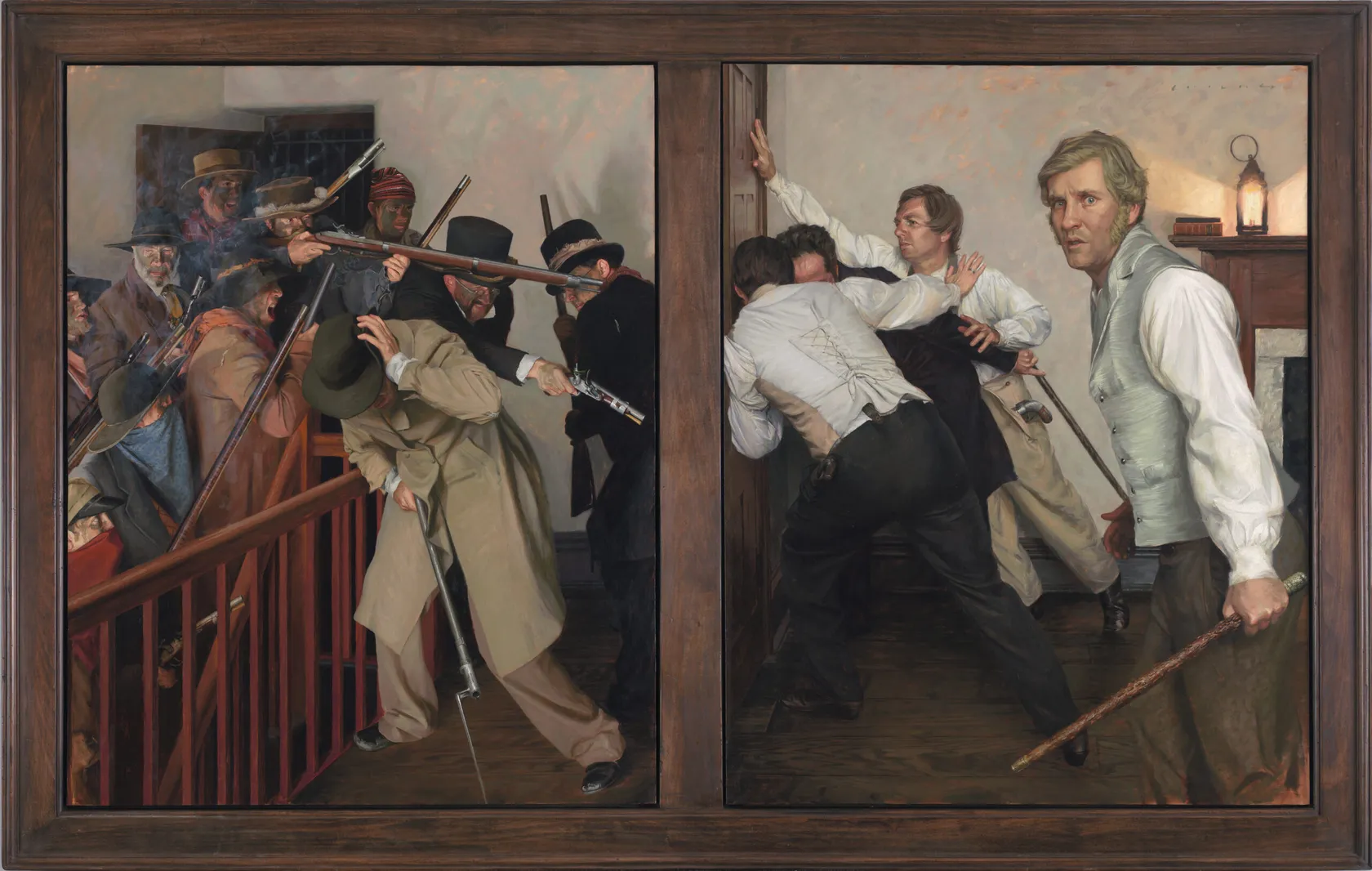
On June 27, 1844, Joseph Smith—founder of The Church of Jesus Christ of Latter-day Saints—and his brother Hyrum Smith were killed by a mob while being held in Carthage Jail in Carthage, Illinois. For Latter-day Saints, this event is remembered as the martyrdom of the Prophet and Patriarch of the Restoration. An account of the event is canonized in LDS scripture as Doctrine and Covenants Section 135, and it describes how the two brothers “sealed their testimony with their blood.”
If you’ve ever wondered about how Joseph Smith died and why, it’s important to understand that the Joseph Smith assassination did not come out of nowhere. It was the culmination of years of conflict, misunderstanding, and escalating tensions between the early Latter-day Saints and their neighbors. Political power struggles, religious disagreements, fear of the rapidly-growing LDS community, and controversy surrounding a newspaper called the Nauvoo Expositor all played important roles. Here’s a closer look at what led to this violent outcome.
A Pattern of Persecution Before Nauvoo
By the time Joseph Smith settled with the Saints in Nauvoo, Illinois in 1839, he and his followers had already experienced years of hostility. Latter-day Saints had previously been driven from Missouri amid violence, including the expulsion order issued by Governor Lilburn W. Boggs in 1838.
These earlier conflicts shaped how both sides viewed each other. Many Latter-day Saints believed they were being persecuted for their religious beliefs. Meanwhile, many non-Latter-day Saint residents feared the growing influence and unity of the Saints.
Nauvoo offered a temporary refuge. Within just a few years, it grew into one of the largest cities in Illinois. Joseph Smith served as mayor, lieutenant general of the local militia (the Nauvoo Legion), and the religious leader of the Saints. This concentration of authority helped protect the community, but it also raised suspicions among surrounding towns.
Rising Political Tensions
Politics played a significant role in the tensions surrounding Joseph Smith. The Latter-day Saints often voted as a unified group, which made them an influential political force in regional elections. Local political leaders sometimes worried that this voting bloc could determine the outcome of contests in the county and even the state.
By 1844, Joseph Smith had also announced a campaign for president of the United States. His platform included ideas such as expanding federal power to protect minority rights and compensating slaveholders to end slavery. While the campaign was partly symbolic and aimed at raising awareness of the Saints’ grievances, critics interpreted it as further evidence that Smith sought excessive power.
In addition, Nauvoo’s city charter granted the city considerable autonomy, including its own courts and militia. To supporters, these powers protected the Saints from further persecution. To critics, they appeared to place Joseph Smith and Nauvoo above the law.
This political environment created a volatile situation. Joseph and Hyrum Smith were among the most influential figures in Illinois at the time, making the Joseph Smith murder a form of political violence.
Religious Disagreements and Cultural Suspicion
Religion also contributed significantly to the conflict. Joseph Smith taught doctrines that many American Christians of the time found unfamiliar or controversial. These included new scripture such as the Book of Mormon, temple ordinances, and unique teachings about the nature of God and humanity’s divine potential.
Rumors about emerging practices within the Church—particularly plural marriage—circulated widely in the early 1840s. The practice was not yet publicly acknowledged and was often misunderstood or exaggerated by opponents. Even so, it became a major source of tension both inside and outside the Church.
Some former Church members became vocal critics of Joseph Smith, arguing he had strayed from his earlier teachings. Their actions would soon play a key role in the events leading to his death.
The Nauvoo Expositor Controversy
The immediate crisis that led to Joseph Smith’s imprisonment began with the publication of the Nauvoo Expositor. In June 1844, a group of former Latter-day Saints, including William Law, published the first issue of this newspaper in Nauvoo. The paper accused Joseph Smith of abuses of power and criticized doctrines and practices of the Church.
City leaders believed the paper would aggravate pre-existing tensions, potentially leading to more violence against the Saints. Acting in his role as mayor, Joseph Smith and the Nauvoo City Council declared the newspaper a public nuisance and ordered the printing press destroyed. In their understanding, the action was a legal attempt to prevent mob violence and protect the city. However, critics saw it as a violation of freedom of the press.
The destruction of the press quickly sparked outrage throughout the region. Soon after, charges were filed against Joseph Smith and other city leaders for inciting a riot.
Joseph Smith’s Arrest and Imprisonment
Initially, Joseph Smith appeared before a local court in Nauvoo and was released. But opposition continued to build. Soon additional charges, including treason against the state of Illinois, were brought against him after he declared martial law in Nauvoo and mobilized the Nauvoo Legion to defend the city.
Illinois governor Thomas Ford demanded that Joseph Smith stand trial in Carthage, the county seat. Although he feared for his life, Joseph Smith ultimately decided to surrender, believing that doing so might prevent further violence against the Saints. He and Hyrum Smith were taken to Carthage Jail to await trial with the promise that law enforcement would protect them from mob action.
The Mob at Carthage Jail
On the afternoon of June 27, 1844, a mob of 150 to 200 armed men with black-painted faces stormed the jail where Joseph and Hyrum Smith were being held. During the attack, Hyrum was shot and killed almost immediately. Joseph was also shot multiple times and died after falling from a second-story window during the assault.
John Taylor and Willard Richards, other Mormon leaders, were also in the room. Taylor was shot four times but survived, and Richards emerged unscathed. The mob quickly fled. Although several men were later tried for the murders, none were ultimately convicted.
The Martyrdom in Latter-day Saint Memory
For members of The Church of Jesus Christ of Latter-day Saints, Joseph and Hyrum Smith’s deaths are remembered as a martyrdom.
According to the account preserved in Doctrine and Covenants 135, Joseph “calmly surrendered himself to the supposed demands of the law” and went to Carthage knowing the danger he faced. In that sense, Latter-day Saints view his death as a final witness of his testimony and mission.
John Taylor, who was present during the attack, later wrote that Joseph Smith had done “more, save Jesus only, for the salvation of men in this world” than any other man. While historians may debate various details and motivations, the devotion of those who followed Joseph Smith remains central to understanding what his death meant for believers.
A Turning Point in Latter-day Saint History
The assassination of Joseph and Hyrum Smith was a defining moment in Latter-day Saint history. Their deaths left the Church without its founding prophet for the first time. In the months that followed, Church members ultimately sustained the leadership of the Quorum of the Twelve Apostles under Brigham Young, which led to their eventual migration west to Utah.
The tragedy at Carthage reinforced a deep sense of unity and shared sorrow among the Saints, shaping the culture of the Church for generations.
Complex Disagreements with a Tragic Result
The assassination of Joseph Smith was not caused by a single dispute or moment of anger. The destruction of the Nauvoo Expositor triggered the final events, but the deeper causes ran much deeper: fears about political power, disagreements over doctrine, and long-standing hostility toward the rapidly growing Latter-day Saint community.
Despite the violence that ended his life, Joseph Smith’s influence continued through the movement he founded. For Latter-day Saints, his life and death stand as a reminder of both the cost of religious conviction and the enduring faith of the early Saints.
Sources
- Doctrine and Covenants Section 135
- churchofjesuschrist.org
About Mormonism Explained: Mormonism Explained is a resource that was designed to provide objective and factual information about Mormonism, its history, doctrines, and policies. Our team of researchers consults experts and primary sources to present factual information on a variety of topics relevant to the Mormon Church.