Mormonism Explained
Is the Church Targeting Ex-Mormons Over the Term "Mormon"?
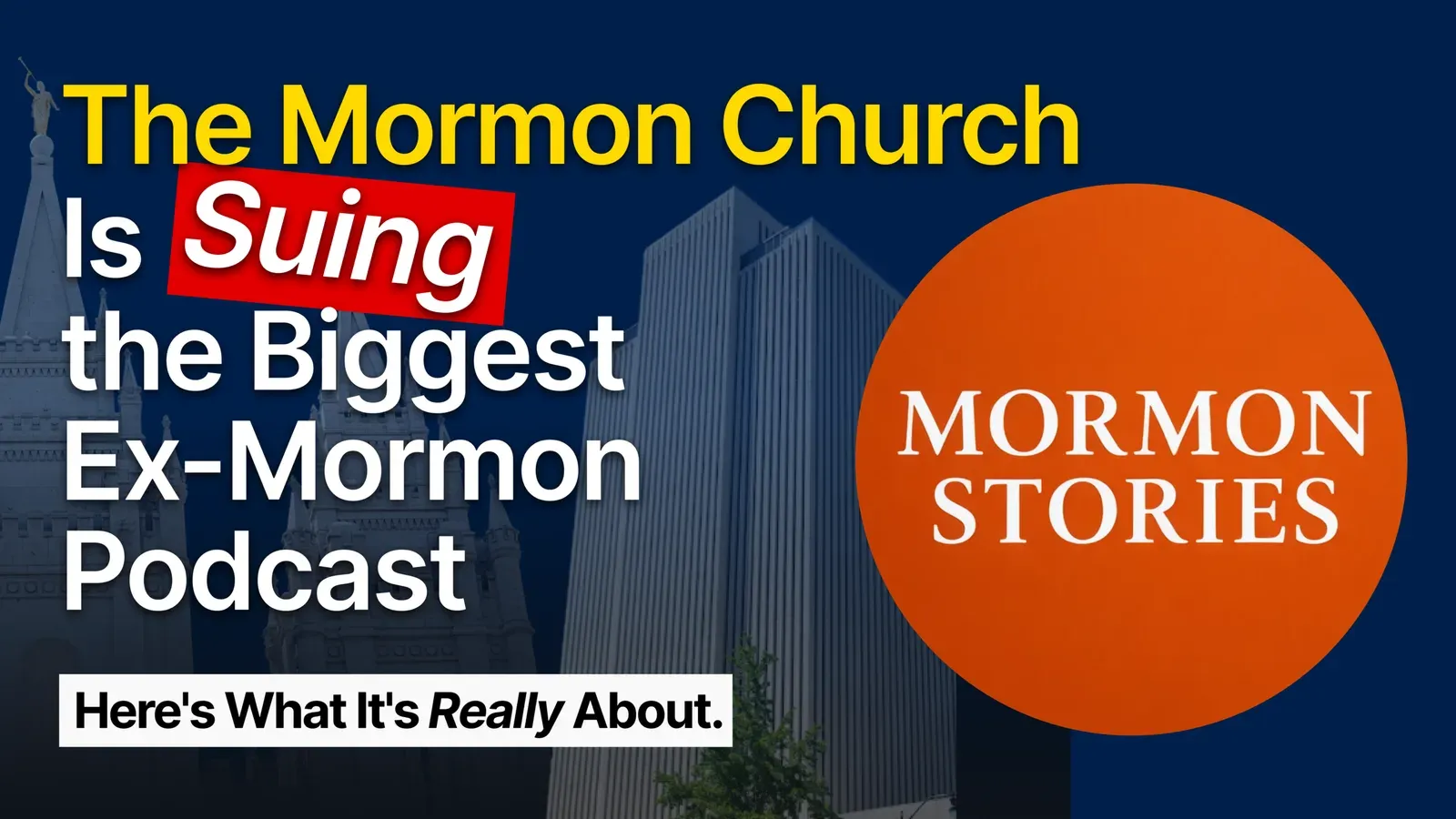
A recent Salt Lake Tribune article has renewed debate about whether the Church is attempting to pressure critics like John Dehlin to rebrand.

A recent Salt Lake Tribune article has renewed debate about whether The Church of Jesus Christ of Latter-day Saints is “pressuring” critics, such as Mormon Stories Podcast creator John Dehlin, to rebrand. For some readers, the story appears to confirm that the Church is attempting to silence or marginalize former members and critics by restricting their use of the word “Mormon,” “Mormonism,” or related imagery. For others, the situation looks more like a dispute over branding and intellectual property that has little to do with theology.
As with most controversies involving religion, media, and law, the reality is more complex than the most reactive interpretations. A careful look at the Church’s policies, history, and stated principles around terms like Mormonism indicates this issue is less about targeting ex-Mormons and more about preventing public confusion over what is—and is not—official Church communication.
The Role of Intellectual Reserve
Intellectual Reserve, Inc. is the entity that manages the Church’s intellectual property. Its responsibility includes overseeing trademarks, copyrights, and other protected elements associated with Church publications, digital products, and visual identity. This is not a unique arrangement; large religious organizations, universities, and nonprofits routinely maintain similar entities to protect their names and branding.
The primary purpose of this enforcement is not to antagonize critics or inhibit their free speech. Rather, it is to ensure clarity for the public—especially those who are unfamiliar with the Church—about which media sources are official and which are not. In an era where information spreads quickly and visually, branding confusion can happen easily and unintentionally.
Preventing confusion is fundamentally different from suppressing disagreement. One is a matter of consumer clarity; the other is a matter of ideology. The Church has consistently demonstrated that its goal is the former, not the latter.
Free Speech and the 11th Article of Faith
Claims that the Church is attempting to silence critics also sit uneasily alongside its own doctrinal commitments. The 11th Article of Faith states: “We claim the privilege of worshiping Almighty God according to the dictates of our own conscience, and allow all men the same privilege, let them worship how, where, or what they may.”
This principle has been cited by practically every Mormon leader as evidence of a strong institutional commitment to freedom of belief, including the freedom to disbelieve. While critics may understandably question how this principle plays out in specific disputes, it is difficult to argue that the Mormon prophet and other officials think voices should be suppressed simply for being critical.
Indeed, there is little evidence that the Church objects to Mormon Stories or similar platforms because they publish Church-critical material. Critical books, podcasts, and articles about the Church are widespread and generally uncontested from a legal standpoint. The issue, instead, lies in presentation.
Branding, Not Belief
According to the Church’s explanations, rebranding requests typically arise when media outlets—whether critical, neutral, or even supportive—use names, logos, fonts, or visual elements that too closely resemble official Church materials. These requests are not limited to ex-Mormon or critical platforms. Faith-supportive groups and independent LDS-themed projects have also been asked to adjust their branding when it risks being mistaken for an official Church product.
In the case of Mormon Stories, there are several branding similarities that may reasonably raise concern: imagery of the Christus statue associated with official Church publications, light-beam motifs frequently used in Church media, comparable fonts, the term “Mormon,” and color palettes similar to those found in official Church apps and websites. When taken together, these elements can blur the line between independent commentary and official representation.
From a branding perspective, this is precisely the kind of scenario intellectual property enforcement is meant to address.
The “Mormon” Label and the Question of Hypocrisy
In response to this event, some have asked: Why would the Church enforce intellectual property rights around the term “Mormon” and “Mormonism” when it has publicly emphasized that it prefers not to be called that at all?
The answer lies partly in public recognition. Despite recent efforts to emphasize the Church’s full name, the reality is that the majority of people worldwide still recognize the faith primarily by the nickname “Mormon” or “Mormonism.” That recognition did not disappear overnight, nor could it realistically be expected to.
Because of this, the Church continues to maintain legal protections around the term in specific contexts. This is not about claiming ownership of a word, but about preventing its use in ways that suggest official sponsorship or endorsement.
If an unauthorized source uses the word “Mormon” while simultaneously presenting itself in a way that looks official, the potential for confusion is significant, especially for investigators, journalists, or casual readers encountering the content through search engines or social media.
Algorithms Don’t Understand Theology
Modern information ecosystems add another layer of complexity. Internet algorithms do not distinguish between “The Church of Jesus Christ of Latter-day Saints” and “the Mormon Church” in the nuanced way humans might approach Mormonism. Search engines, app stores, and social platforms often rely on keywords, visual similarity, and user behavior to determine credibility and relevance.
As a result, unofficial or critical content that resembles official branding can surface in ways that unintentionally mislead users. From the Church’s perspective, reducing that confusion is not only reasonable, but necessary, particularly in a media climate where misinformation can spread rapidly.
A Disagreement Without a Villain
None of this requires viewing John Dehlin or Mormon Stories as acting in bad faith. Nor does it require assuming that the Church’s actions are motivated by fear of criticism. It is entirely possible, and perhaps most accurate, to see this as a genuine disagreement about branding boundaries in a charged religious context.
Reasonable people can disagree about whether the Church’s enforcement efforts are too broad or insufficiently sensitive to historical usage of the term “Mormon.” They can also disagree about whether certain visual elements should be considered distinctive enough to warrant protection. But framing the issue as a targeted campaign against ex-Mormons oversimplifies a more nuanced reality.
So, Is the Church Trying to Target Critics?
The question, then, is not whether the Church is trying to target ex-Mormons who use the term “Mormonism,” but whether it is trying to protect the clarity of its public identity in an increasingly crowded and algorithm-driven media landscape. The available evidence suggests the latter.
That does not mean Intellectual Reserve always gets it right, nor that critics are wrong to raise concerns. It does mean, however, that this dispute is better understood as a branding and intellectual property issue rather than an attempt to silence dissent. For a faith that explicitly affirms the right of all people to believe (or disbelieve) as they choose, that distinction matters.
About Mormonism Explained: Mormonism Explained is a resource that was designed to provide objective and factual information about Mormonism, its history, doctrines, and policies. Our team of researchers consults experts and primary sources to present factual information on a variety of topics relevant to the Mormon Church.