
Last Updated: May 18, 2026
The beliefs and practices of the Church of Jesus Christ of Latter-day Saints are often portrayed as mysterious and bizarre in pop culture. Perhaps one of the biggest targets for misunderstanding and ridicule is the religious clothing members of the Church wear under their clothes.
Why do Mormons wear garments? While many sources might mock, this practice is neither secretive or strange to Latter-day Saints themselves. To them, it is sacred, deeply symbolic, and firmly rooted in ancient, biblical patterns.
Far from being a modern, “Mormon” invention, the wearing of sacred clothing has a very old precedent. Critics sometimes assume that temple garments represent a departure from biblical Christianity. But when viewed through the lens of scripture, they actually show remarkable continuity.
A Pattern Established in Eden
The story begins in the opening chapters of Genesis. After Adam and Eve ate the fruit of the tree of knowledge, they became aware of their nakedness and sewed fig leaves together to cover themselves (Genesis 3:7). But their handmade coverings were not the final word.
Genesis 3:21 records, “Unto Adam also and to his wife did the Lord God make coats of skins, and clothed them.” This verse may seem simple, but it’s theologically rich. After pronouncing the consequences of Adam and Eve’s transgression, God Himself provided clothing for them. These “coats of skins” replaced the insufficient coverings they had made. The act was both practical and symbolic.
First, it represented divine mercy. Even as Adam and Eve left Eden, God did not abandon them. He clothed them—an act of care, provision, and continued relationship.
Second, many Judeo-Christian scholars have noted that “coats of skins” imply that animals’ lives were sacrificed. In that sense, the clothing foreshadowed the ultimate sacrifice of God’s Son, who would “cover” humanity’s sins.
For Latter-day Saints, temple garments symbolically connect to this ancient moment. Just as God clothed Adam and Eve after they entered a fallen world, the garment represents God’s continued protection and covenant relationship with His children. It is not worn as a lucky charm or talisman, but as a reminder: though humanity lives outside Eden, God’s promises endure.
Clothing as Covenant in Scripture
Throughout the Bible, clothing often symbolizes spiritual identity and covenantal status. Priests wore distinctive garments while serving in holy places, prophets sometimes wore symbolic clothing to represent their calling, and people are metaphorically invited to “put on” righteousness (Isaiah 61:10; Ephesians 6:11).
Clothing in scripture frequently signifies belonging, authority, or sacred responsibility. Latter-day Saints see temple garments within this broader biblical language. They are worn daily after a Latter-day Saint makes temple covenants—solemn promises with God made in LDS temples.
The Tabernacle of Moses and Sacred Vestments
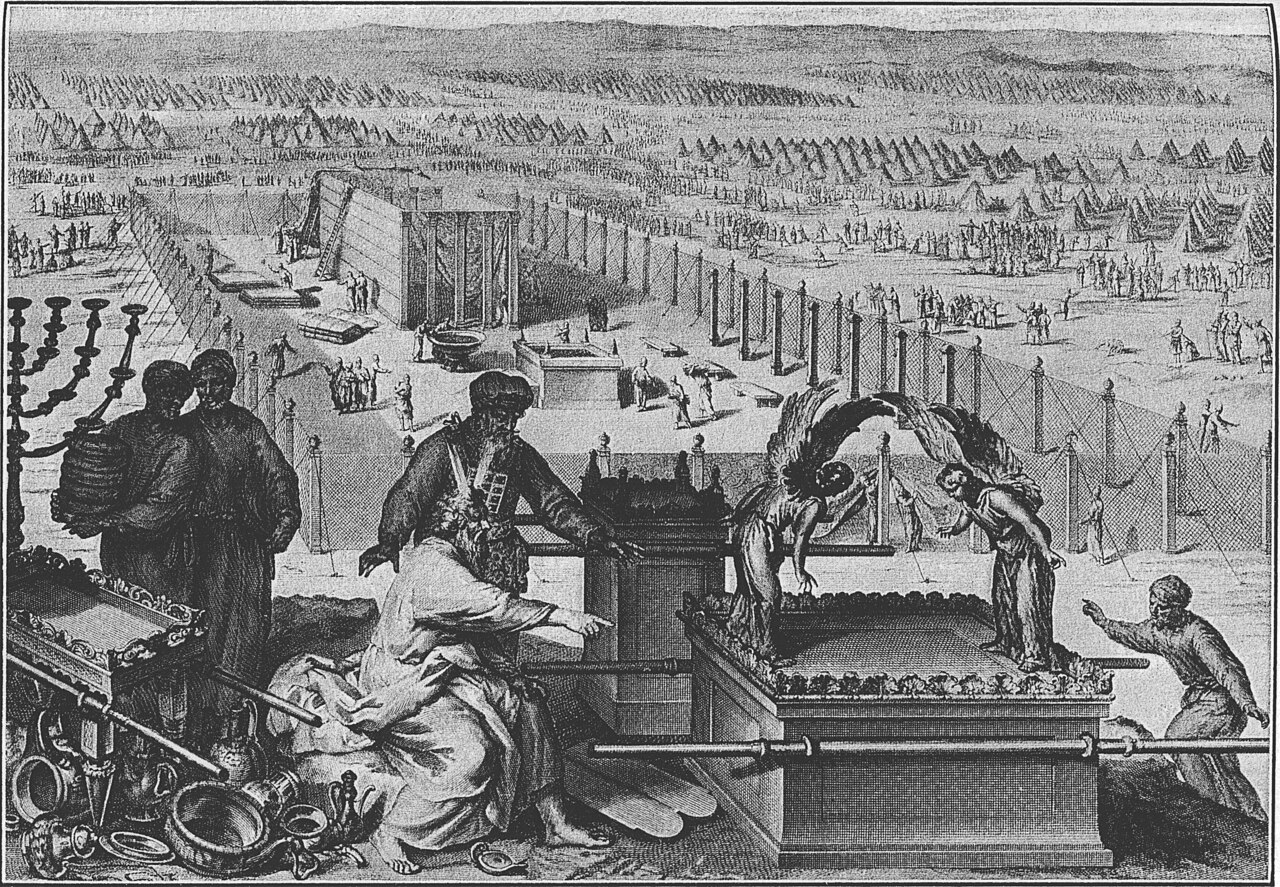
The connection becomes even clearer in the book of Exodus. When the Lord told Moses to build the tabernacle, a portable temple in the wilderness, He also gave detailed instructions regarding sacred clothing for those who would officiate there.
In Book of Exodus 28, the Lord commands Moses to make “holy garments for Aaron thy brother for glory and for beauty” (Exodus 28:2). These included:
- A breastplate
- An ephod
- A robe
- A coat of fine linen
- A mitre (headpiece)
- A girdle (sash)
These garments were divinely prescribed vestments worn by Aaron and his sons as they ministered in the tabernacle. Exodus 28:3 states that they were made “that he may minister unto me in the priest’s office.”
Several important principles emerge from this account:
1. God Commands Sacred Clothing
The priestly vestments were not Moses or Aaron’s idea. They were revealed by God. Their design, materials, and symbolism were specified in great detail. This establishes a biblical pattern: when God institutes sacred rituals, He may also institute sacred clothing to go with them.
2. Clothing Designates One’s Spiritual Role
Aaron and his sons’ garments visibly marked them as being designated for holy service. The high priest represented Israel before God and God before Israel. The clothing signified responsibility, covenant, and divine commission.
Latter-day Saints see temple garments as echoing these principles. While modern members are not performing animal sacrifices and modern LDS temples aren’t an exact match for ancient Israelite temples, the underlying concept remains: sacred clothing can designate spiritual responsibility and a covenant relationship with God.
Temples Through the Ages
Temples are a consistent thread in the biblical narrative. From the tabernacle of Moses to Solomon’s temple and later sacred structures, God has repeatedly established holy houses where divine presence is symbolically manifested.
Patterns of temple worship such as ritual washing, anointing, and sacred clothing have ancient roots. The tabernacle included a laver for washing (Exodus 30:18–21), anointing oil (Exodus 30:22–33), and consecrated vestments (Exodus 28). These elements formed a system of preparation for entering sacred space.
Latter-day Saint temples consciously draw upon these biblical patterns. Members participate in ordinances that symbolically echo ancient practices of washing and anointing—rituals that signified purification and consecration in the Old Testament.
Within that context, Mormon garments function as a continuation of the biblical theme of sacred vestments. It is associated with covenants made in the temple and represents a life dedicated to God.
Are Mormon Garments “Magic Underwear”?
One common misconception is that “Mormon underwear” is viewed as magical or superstitious. However, this is an inaccurate stereotype, and can be offensive to many Latter-day Saints. The garment is not believed to have magic powers. It’s simply a reminder to the wearer of their covenants with God, encouraging them to think of Jesus Christ and live righteously.
In this respect, “Mormon holy undergarments” parallel other biblical symbols:
- The rainbow after the Flood reminded humanity of God’s covenant with Noah.
- The Passover lamb reminded Israel of deliverance from Egypt.
- Circumcision signified covenant belonging under Abraham.
Symbols do not save; God does. But God frequently employs tangible symbols to reinforce spiritual commitments. Temple garments belong in that category.
Early Christians: A “Royal Priesthood”
In the New Testament, priesthood language expanded beyond the sons of Aaron. The Apostle Peter wrote: “Ye are a chosen generation, a royal priesthood, an holy nation” (1 Peter 2:9). Early Christians understood themselves as a covenant people, consecrated to God’s service.
Latter-day Saints interpret their temple worship through a similar lens. Members who choose to participate in temple ordinances are invited to dedicate their lives more fully to God’s work. Mormon garments symbolize that dedication. They quietly designate the wearer as someone who has entered into solemn covenants and seeks to live as part of God’s covenant people.
In this sense, the garment’s connection to Aaron’s vestments is conceptual rather than identical. Both represent sacred responsibility. Both arise from temple worship. Both signify that the wearer stands in covenant relationship with God.
Sacred, Not Secret
Another important distinction is between secrecy and sacredness. In biblical times, not every ordinance was publicly displayed. The Holy of Holies in the tabernacle was entered only by the high priest, and only at appointed times (Leviticus 16). Sacred rites were treated with reverence.
Similarly, Latter-day Saints do not publicly discuss every detail of temple ordinances, not because they are embarrassed or evasive, but because they consider them holy.
Faith Affirmed Through Symbols
So, why do Mormons wear garments? As we see from these biblical examples, it isn’t just for cultural identity. Like Adam and Eve’s coats of skins and the holy vestments of Aaron in the wilderness, temple garments have meaning that goes far beyond surface level. They are not ends in themselves, but visible reminders of invisible commitments.
For Latter-day Saints, that continuity with biblical practice is deeply meaningful. The garment becomes a daily affirmation that the God who walked with Adam and Eve, who spoke to Moses on Sinai, and who dwelt in the tabernacle still invites His children to have a relationship with Him today.
In that sense, the answer to why Mormons wear garments is actually pretty simple: because they believe in a God who has always used sacred clothing to teach, protect, and designate His covenant people, and they see themselves as part of that story.
About Mormonism Explained
Mormonism Explained is a resource that was designed to provide objective and factual information about Mormonism, its history, doctrines, and policies. Our team of researchers consults experts and primary sources to present factual information on a variety of topics relevant to the Mormon Church.
Tags