Mormonism Explained
Analysis
Is There Really Brand Confusion Over Mormon Stories?
The Church’s lawsuit turns on whether people are likely to think the podcast comes from the Church. Here are the branding at issue, the court record, 121 public accounts and both sides’ strongest arguments.
Trademark law turns on one question: is the public likely to think a product comes from, or is connected to, someone else? Here, that means whether people are likely to think Mormon Stories comes from or is connected to The Church of Jesus Christ of Latter-day Saints. The Church says they do. Mormon Stories says they don’t, at least not in any way the law cares about. Contested
One thing the November 24 hearing is not expected to settle is whether people were actually confused. On a motion to dismiss, a court generally treats the complaint’s factual claims as true and asks whether the case can go forward. Evidence like the accounts below would matter later, if the case reaches discovery or trial.
 2:16
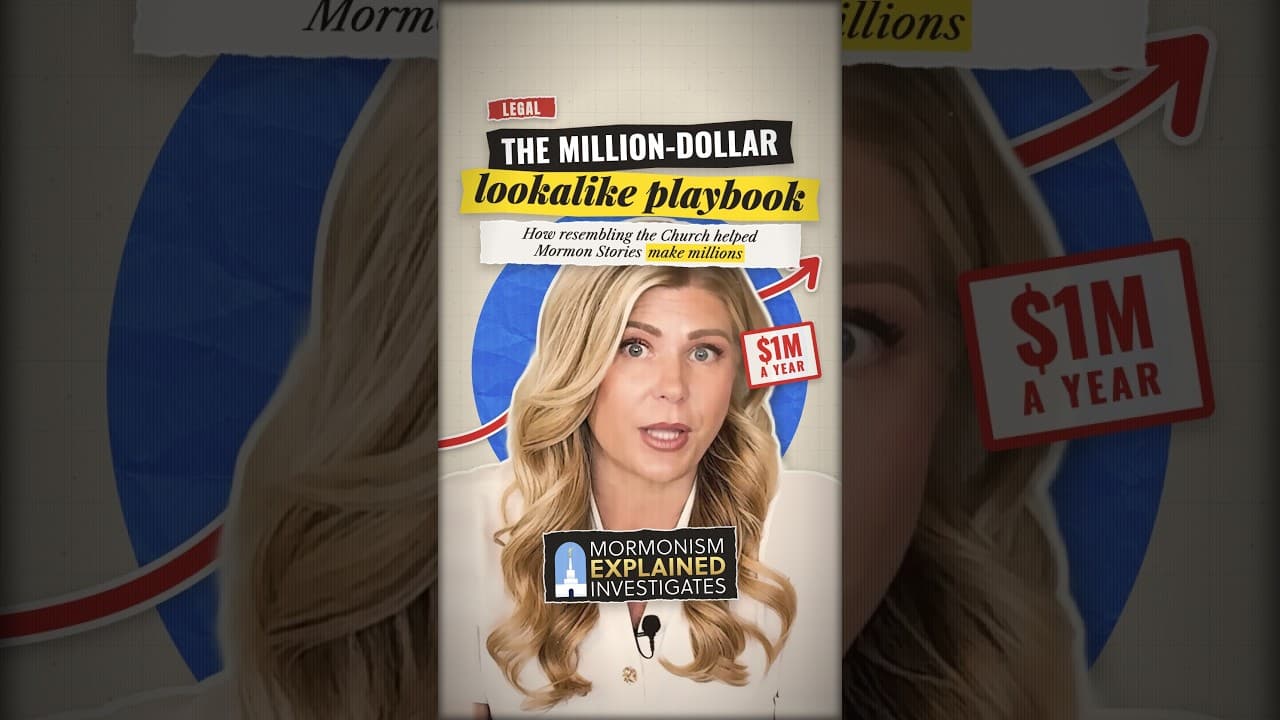
Mormon Church Lawsuit: The Million-Dollar Lookalike Playbook
788 views
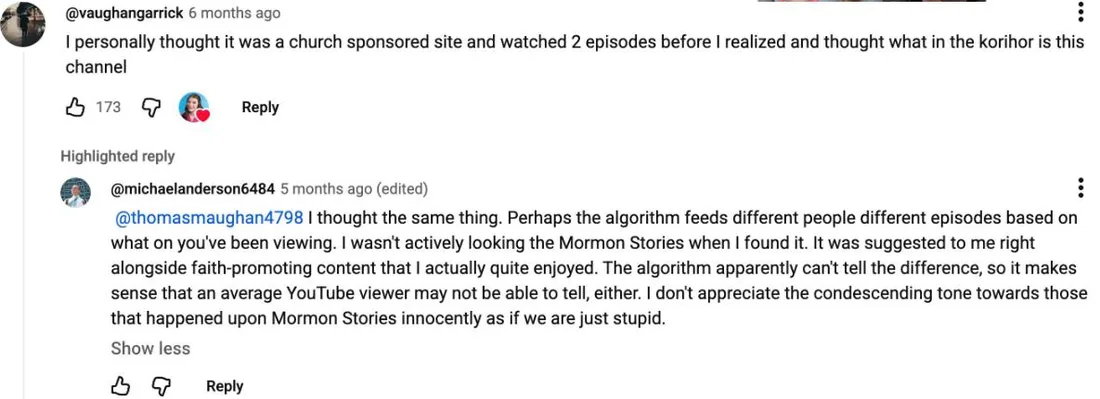
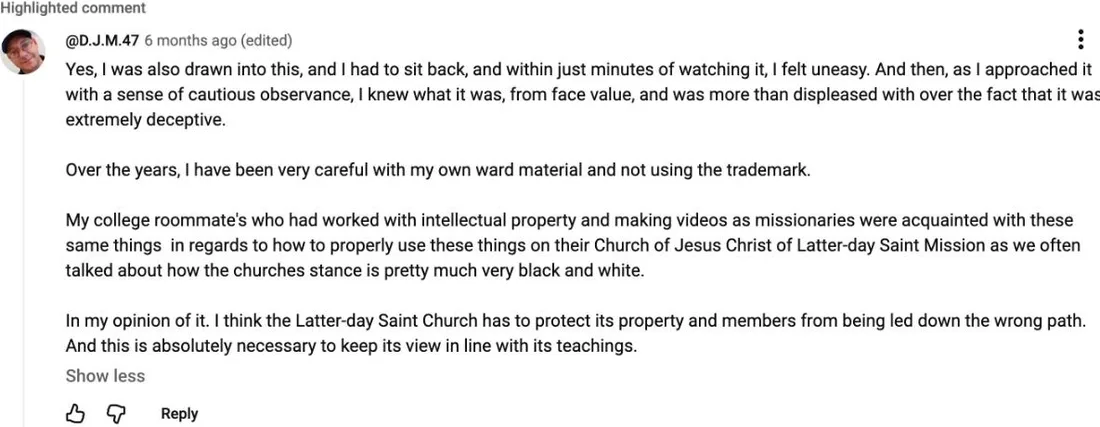
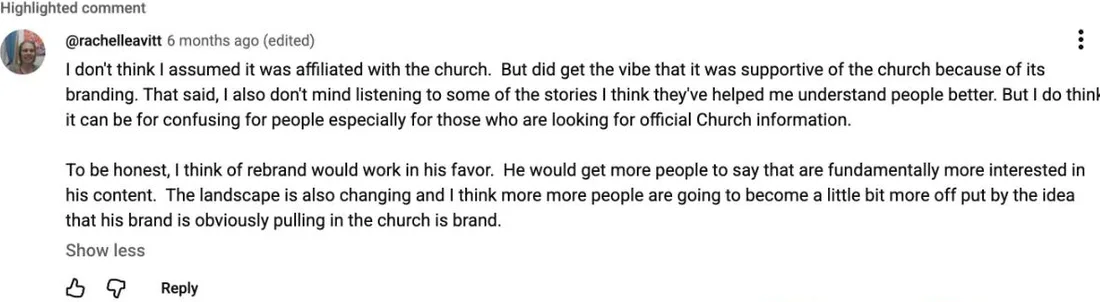
Comments quoted in the Church’s complaint
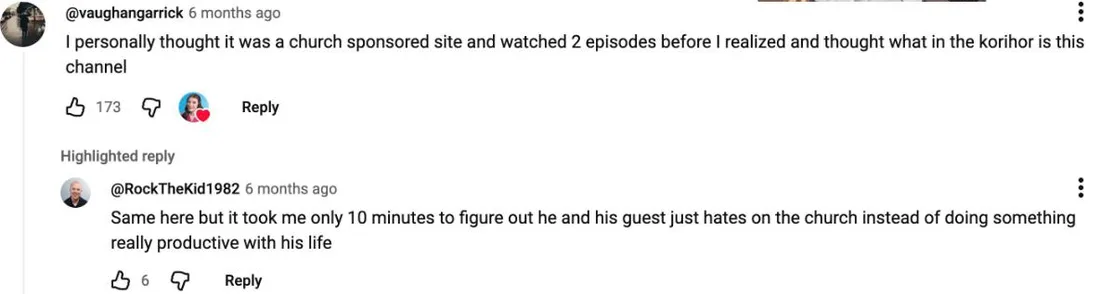
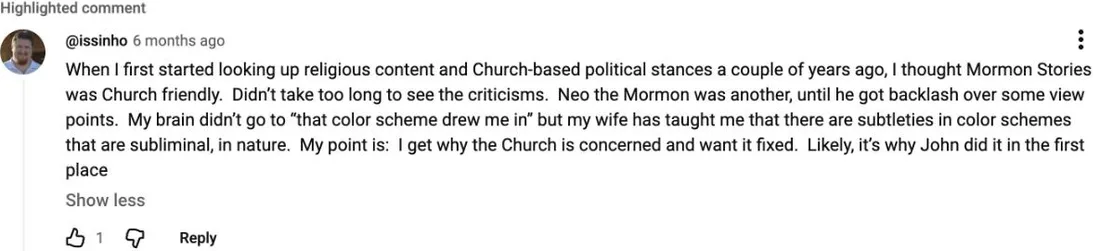
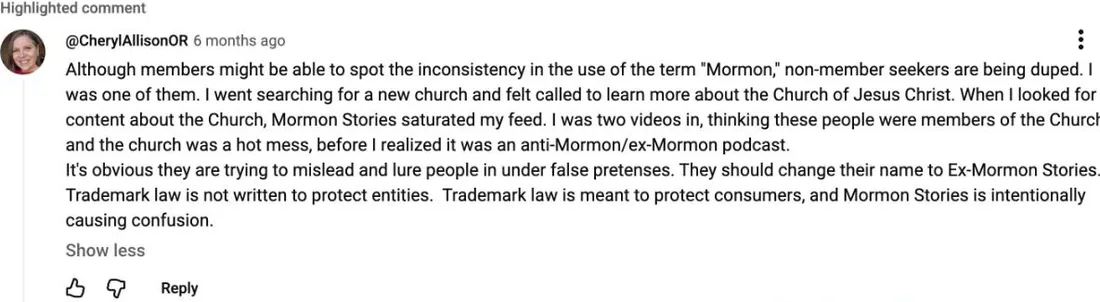
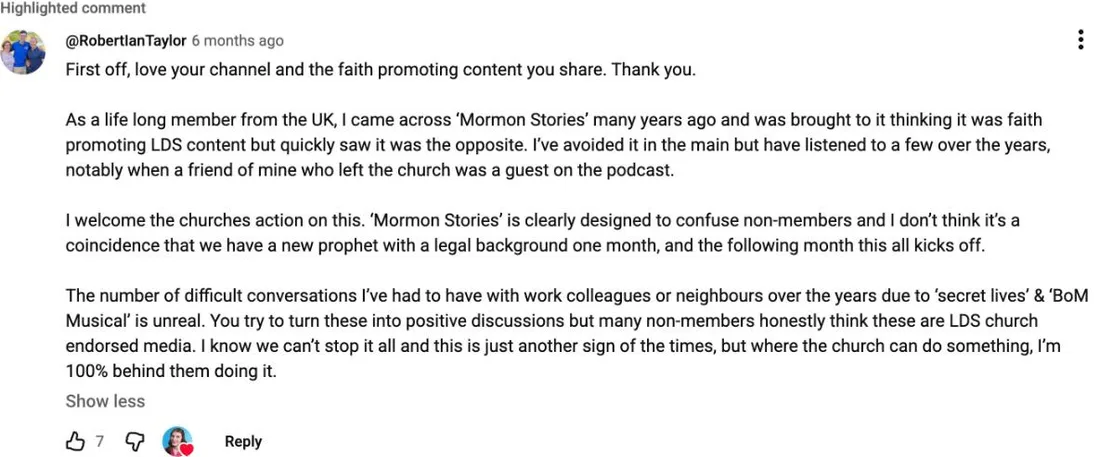
Public accounts we collected, 118 of them firsthand
Thought it was the Church’s · expected faithful content (our count)
Surveys of how common confusion is, in the record so far
Mormon Stories’ side, at full strength Contested
Mormon Stories has used the word “Mormon” in its name since 2005, and Dehlin is right that the Church didn’t object to the name for most of that time. His lawyers’ case that there is no confusion the law should act on rests on five arguments.
- Content is not sponsorship. “Believing something is ‘about Mormons’ is not a belief that it is ‘Church-affiliated,’” Mormon Stories’ lawyers wrote on Sept. 21. Many of the accounts below, including the 50 we coded as expecting faithful content, describe surprise at the show’s point of view rather than a belief that the Church made it. The same is true of several comments in the complaint.
- Too few to matter. The defendants say the complaint’s examples are too few to count after 20 years of the two coexisting, citing a Tenth Circuit decision that treated a handful of instances over a decade as insignificant.
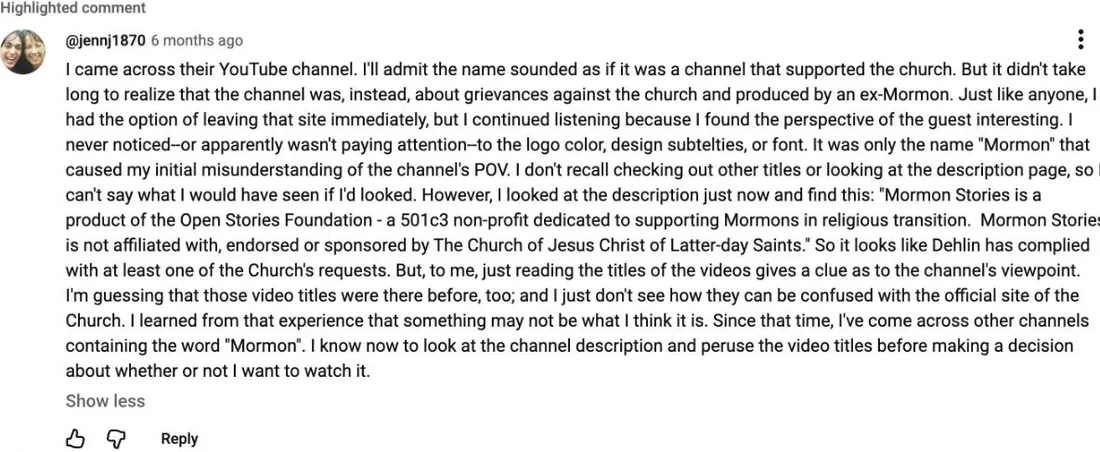
- The wrong cause. The Church’s claims target the name combined with branding, chiefly the design adopted in 2022, which the defendants say they dropped weeks before the suit. The Church has also said Dehlin may use the word “Mormon.” Some accounts predate the blue logo, and some credit the name alone. One commenter (#077) says only the name misled them and that they never noticed the logo, colors or font; another (#107) says they never assumed the show was affiliated with the Church.
- A self-selected sample. The accounts below were posted under a faithful creator’s livestream and our own posts, by people who chose to respond. They are not a survey and can’t say how common confusion is. The same livestream drew about 2,300 comments, by YouTube’s count, including viewers who said they were never confused and many who criticized the lawsuit. One commenter (#095) defends Mormon Stories in the same comment.
- The First Amendment. The defense’s lead argument for dismissal is that the show’s name is part of an expressive work and is protected unless it is explicitly misleading, a bar it says confusion alone doesn’t clear. The Church answers that a 2023 Supreme Court decision, Jack Daniel’s v. VIP Products, means that test doesn’t apply when a name is used as a brand.
What changed in December 2022 Documented
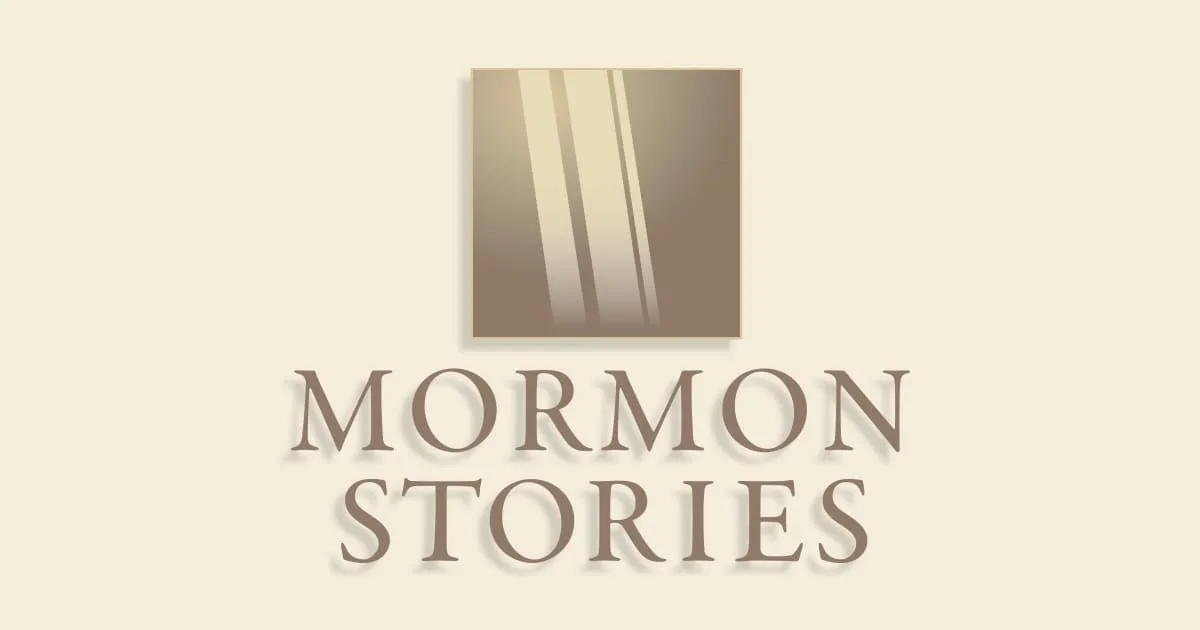
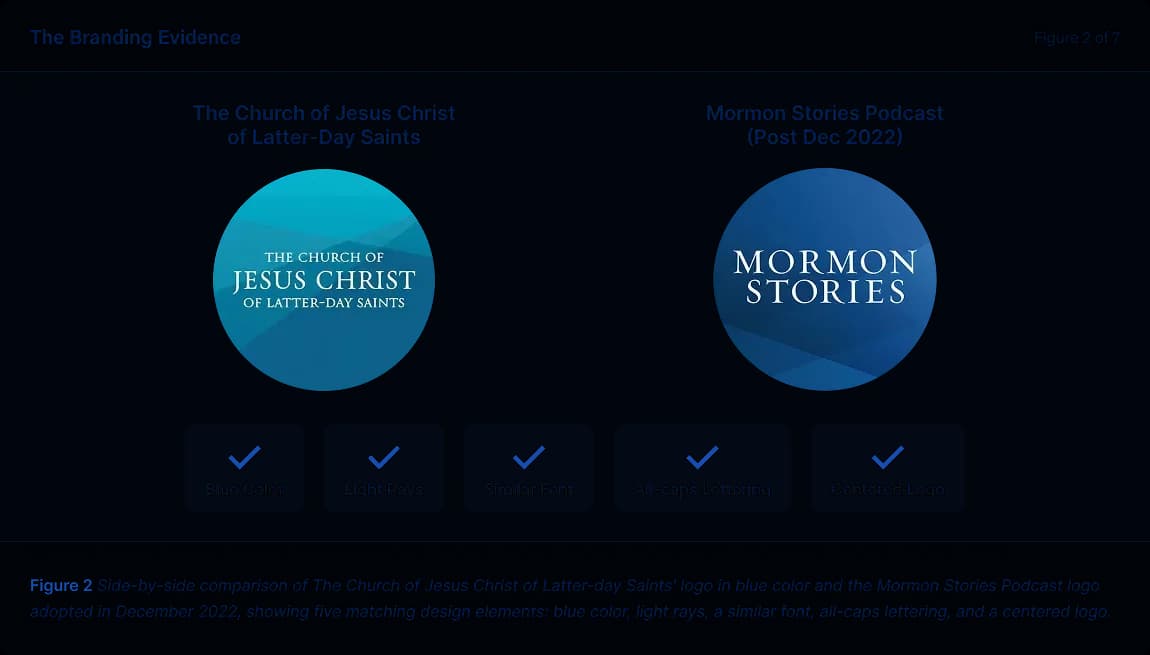
The Church’s complaint isn’t aimed at the name. It targets a cluster of choices that began in December 2022, when Mormon Stories replaced a brown logo with a deep-blue one: an arched frame, a centered figure, light rays radiating above it and an all-caps serif wordmark. Any one of those choices might be explained on its own. Together, the complaint alleges, they track the Church’s own visual system, and paragraph 48 says the logo was adopted “with full knowledge” of the Church’s light-rays design marks.
The complaint also points to photographs. After Mormon Stories told the Church it would stop using Church-owned images, the filing says, the podcast used a Church-owned, copyright-registered photograph of a temple to advertise an episode “just a few days later.”
The Church’s intellectual-property office contacted the foundation about its branding in November 2025. By the defendants’ account, the show then changed the logo’s color to orange and modified its style. Mediation in early 2026 failed, and the Church sued on April 17. What the Church has asked Mormon Stories to change, and what it refused, is in our settlement analysis. How the Church has handled similar branding with other creators, faithful and critical, is in our trademark explainer.
What’s in the court record Documented
- The complaint, paragraph 54 (Apr. 17). The Church quotes 15 comments from Mormon Stories’ own Facebook and YouTube pages, with names redacted for privacy. One reads: “I stumbled upon the Mormon Stories podcast, thinking it was church affiliated.” By our count, three of the 15 say outright that they took the show for the Church’s; most of the rest say they expected faithful content or ask which side the show is on. (Dkt. 1)
- The complaint, paragraph 47. Screenshots of comments on Mormon Stories’ Facebook profile image that, the Church says, recognized how closely the blue logo resembled its own, again with names and photos redacted. (Dkt. 1)
- The Church’s opposition to dismissal (Aug. 20). The Church says it “will prove that many have, in fact, been confused,” and points to a 2022 episode in which, it says, a guest told Dehlin he started listening because he believed the show was Church-affiliated. Mormon Stories’ Sept. 21 reply says the guest said no such thing: he searched for Mormons, found Mormon Stories and took it to mean stories about Mormons. Contested (Dkt. 71, Dkt. 73)
- The Church’s lead lawyer, on a podcast (Sept. 23). In an interview the defendants later filed with the court, David Jordan said the Church has heard from multiple people over the years who thought the show was affiliated with or sponsored by the Church. He added that the legal test is how likely confusion is, not how much actual confusion can be shown. (Dkt. 75, Exhibit L)
121 people, in their own words Witness
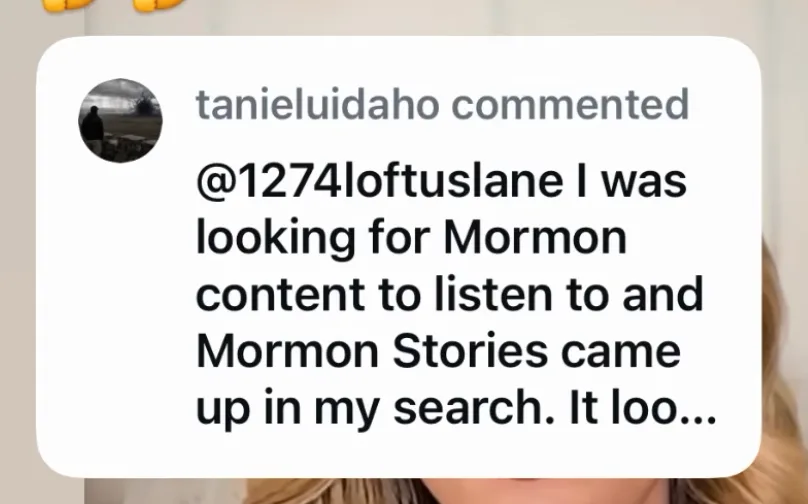
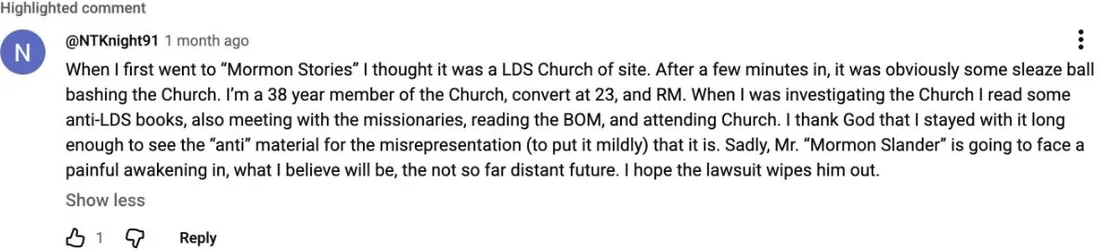
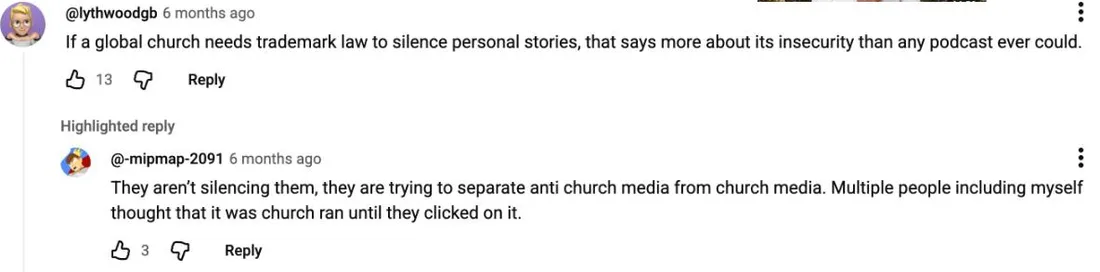
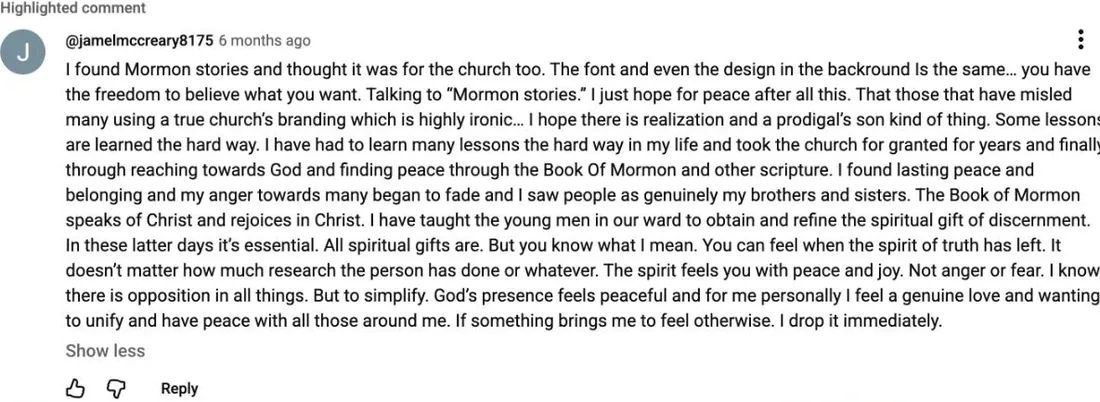
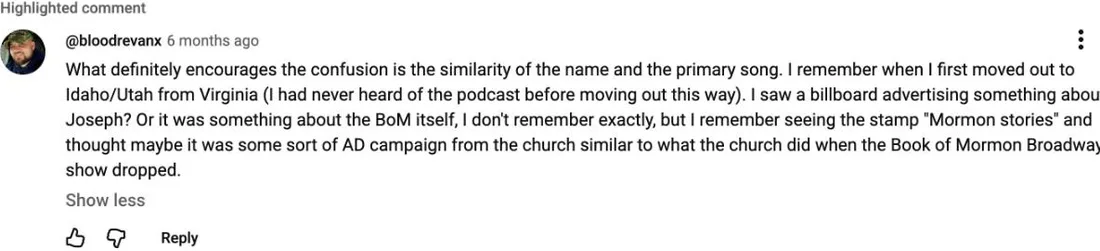
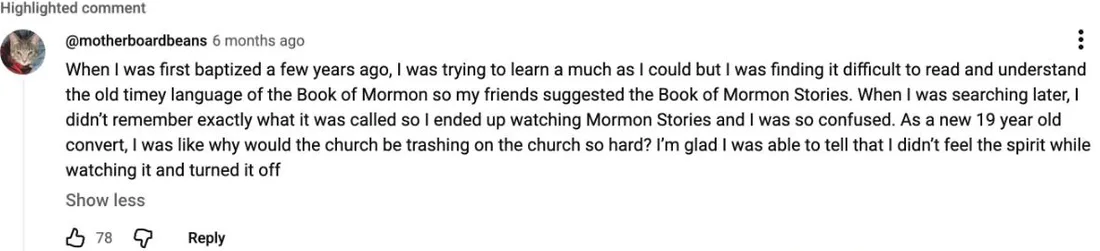
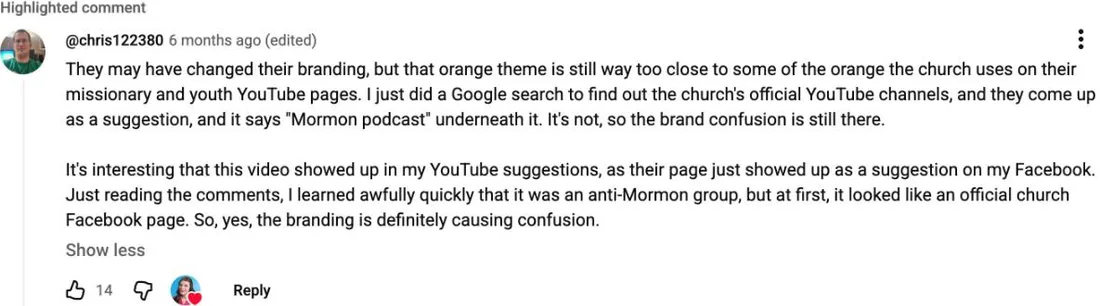
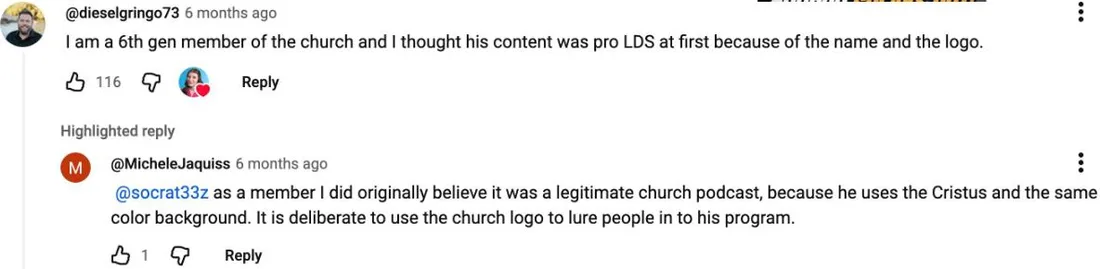
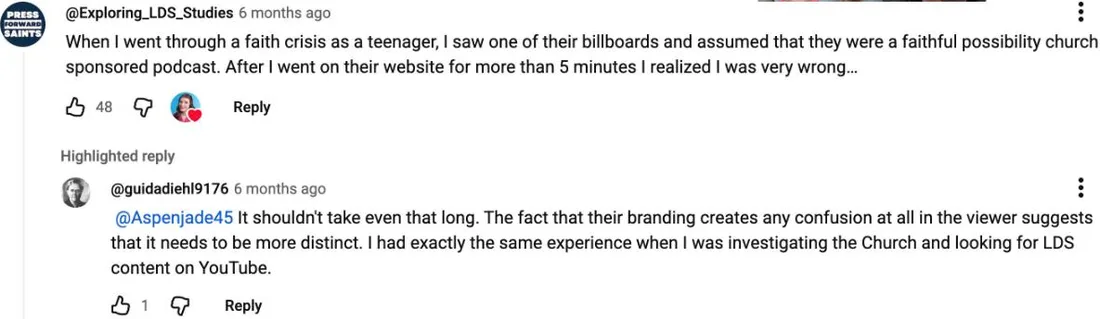
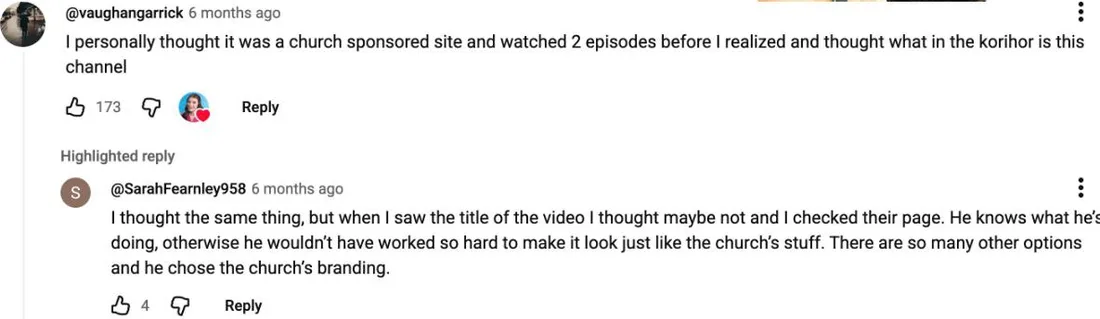
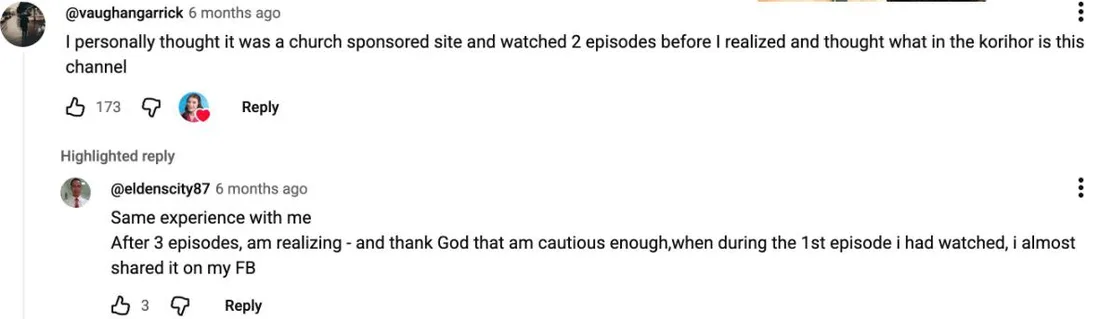
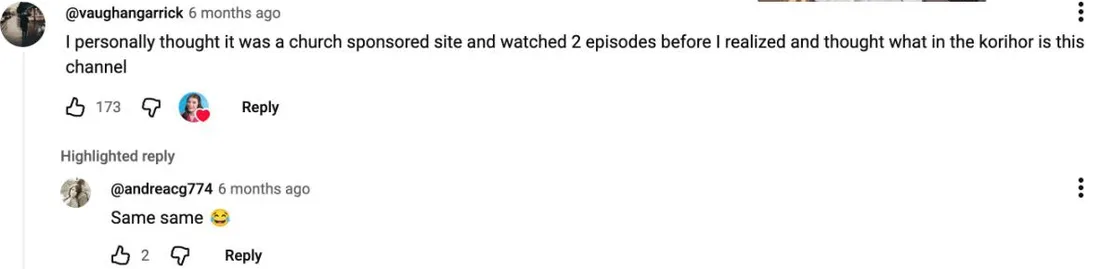
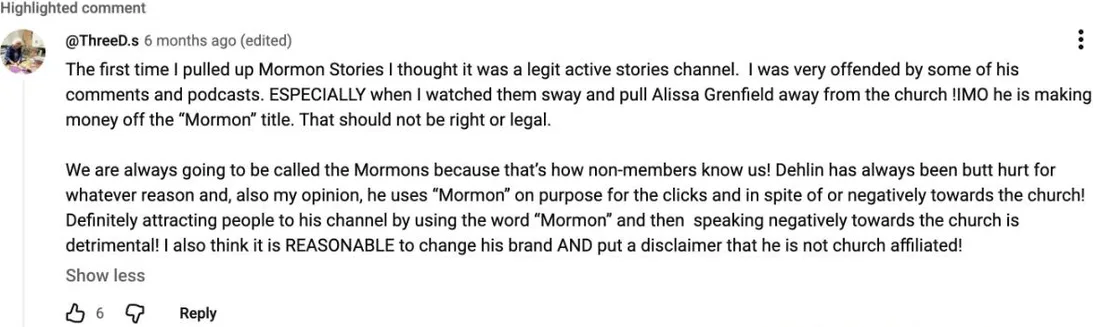
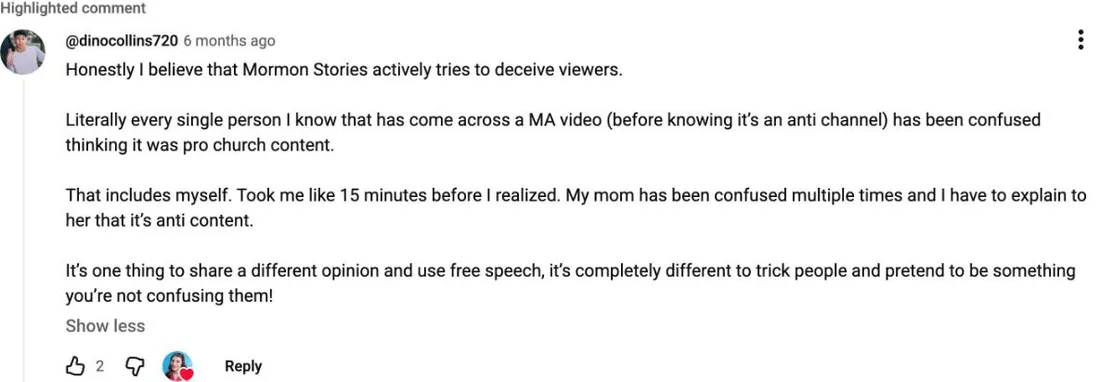
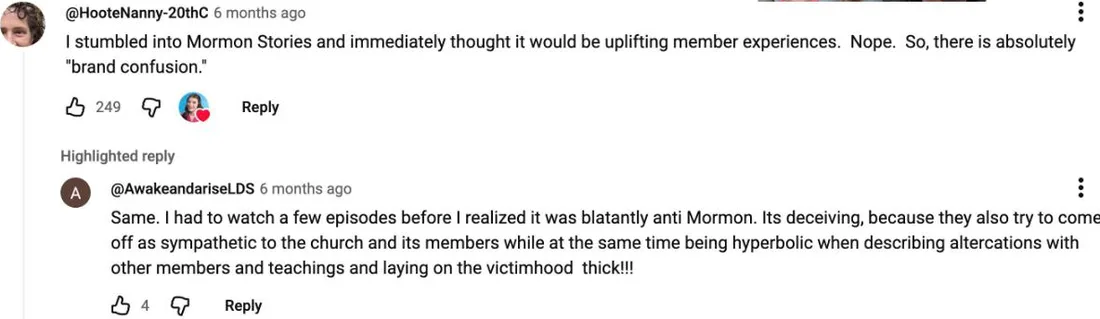
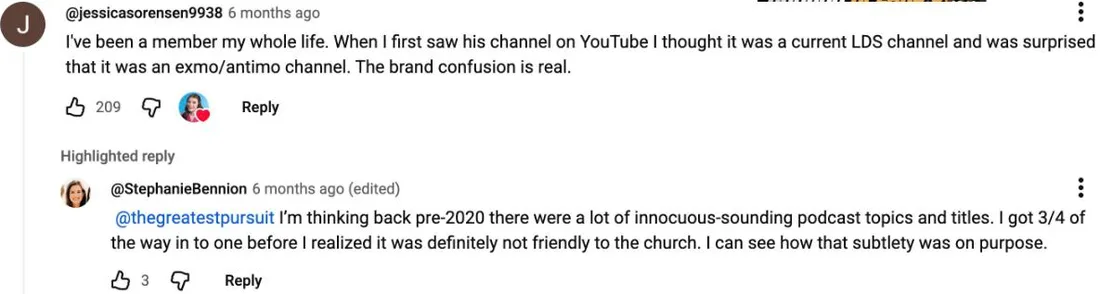
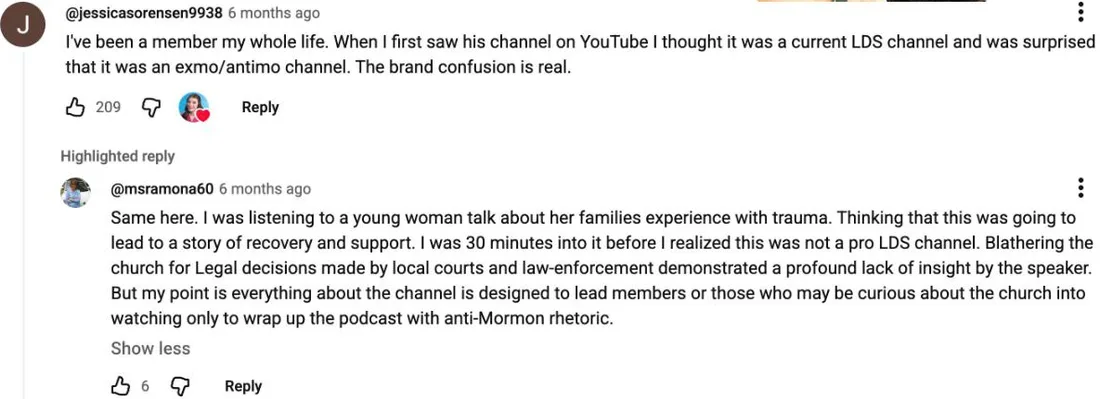
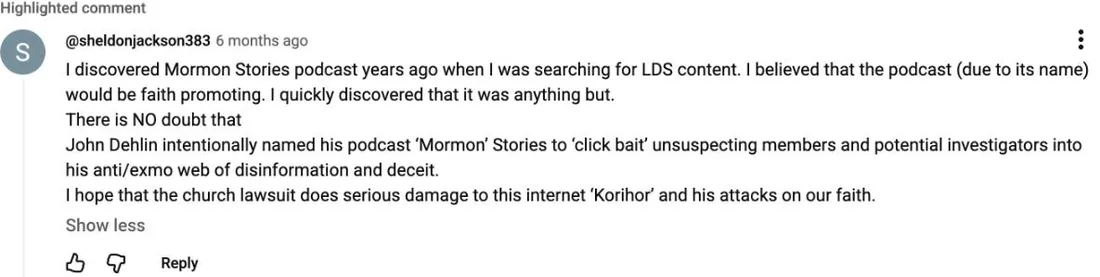
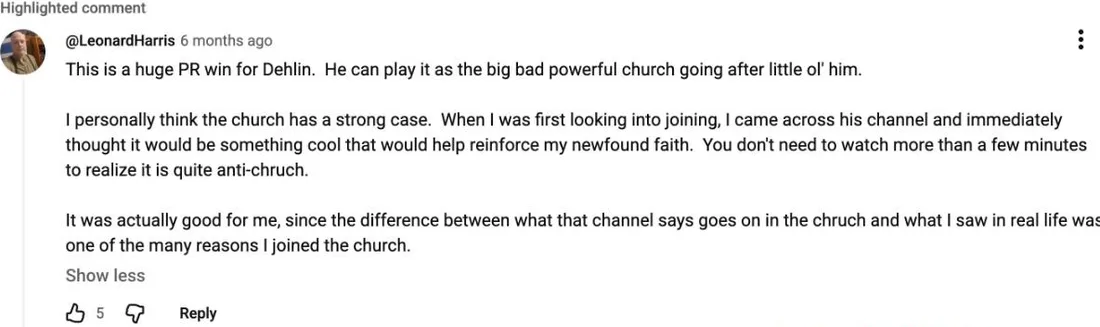
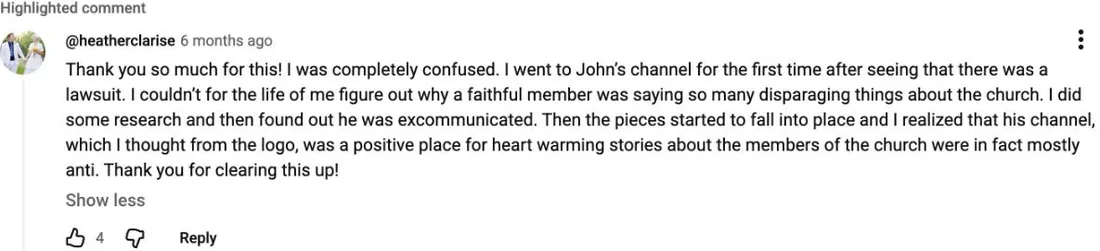
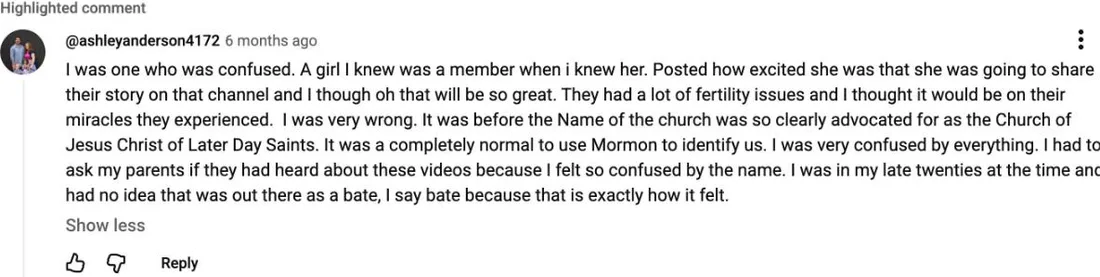
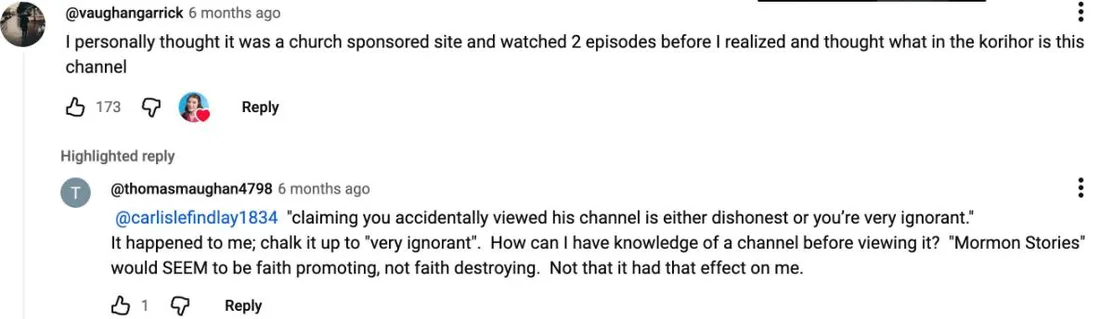
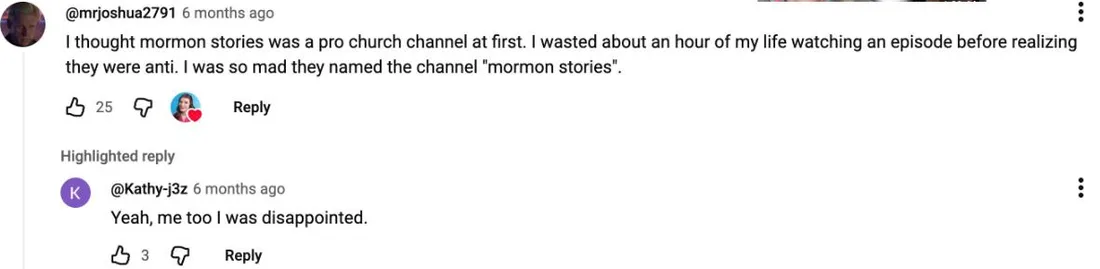
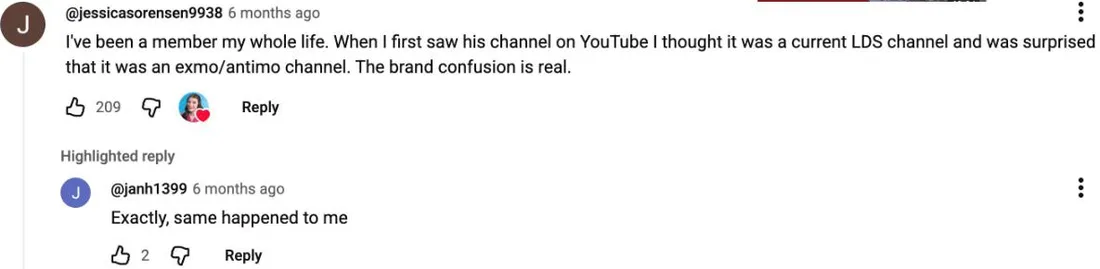
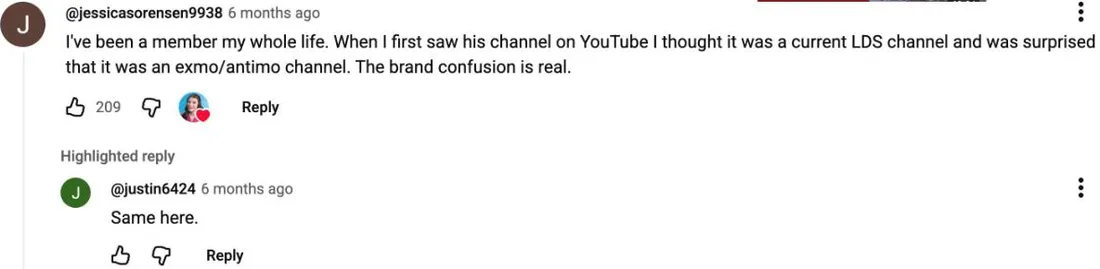
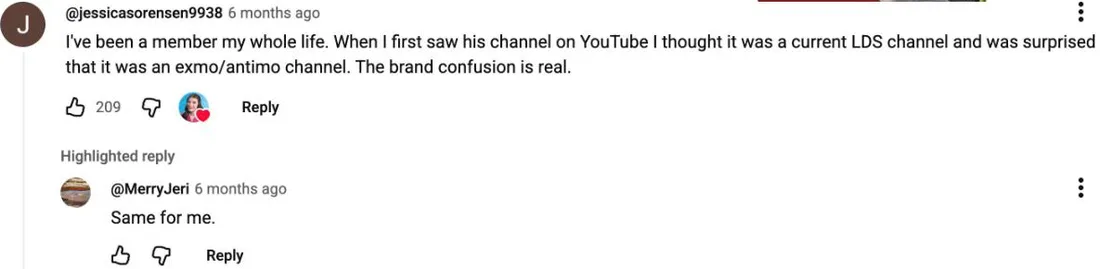
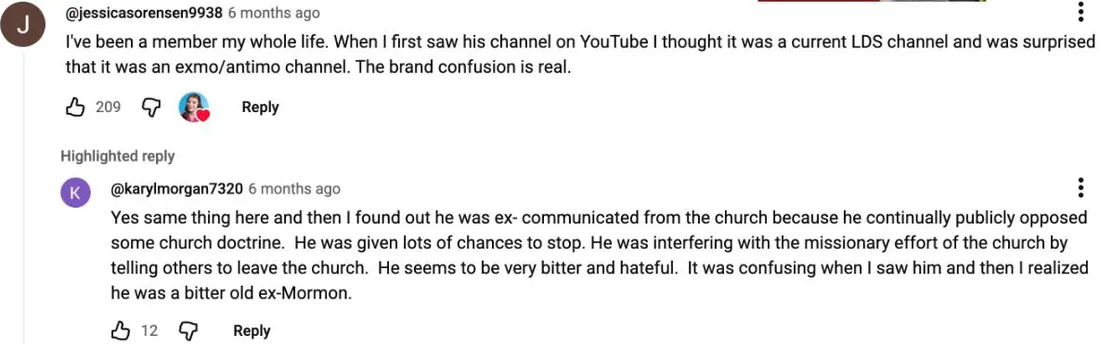
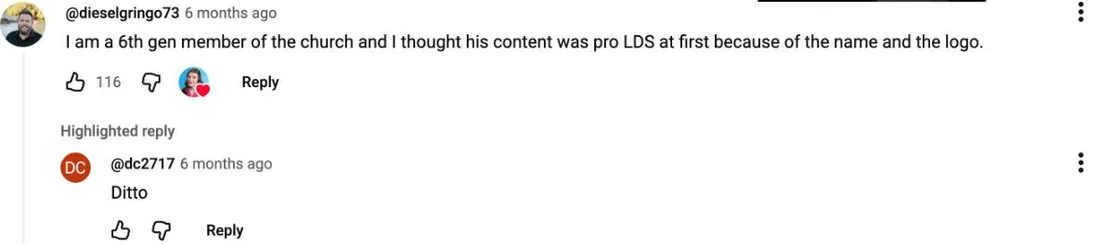
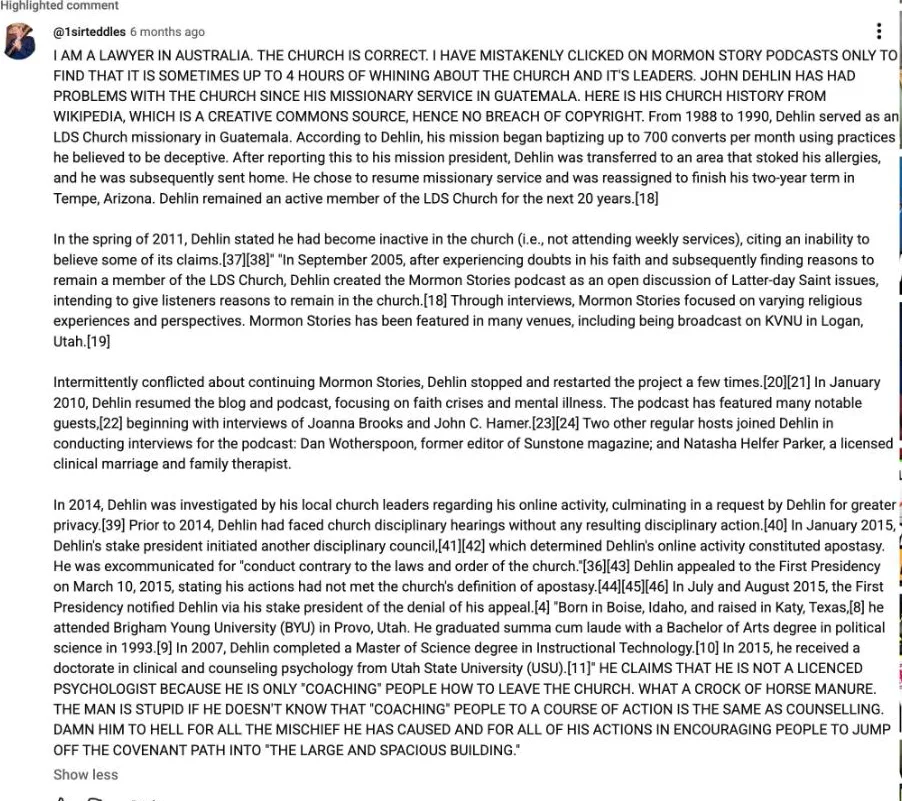
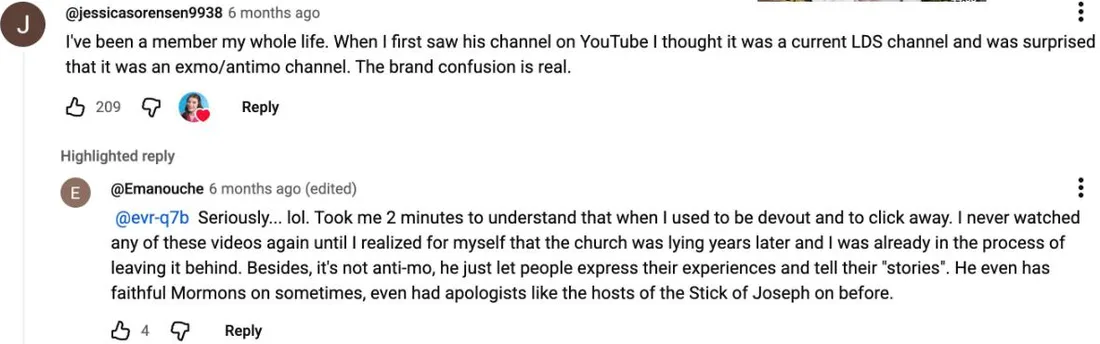
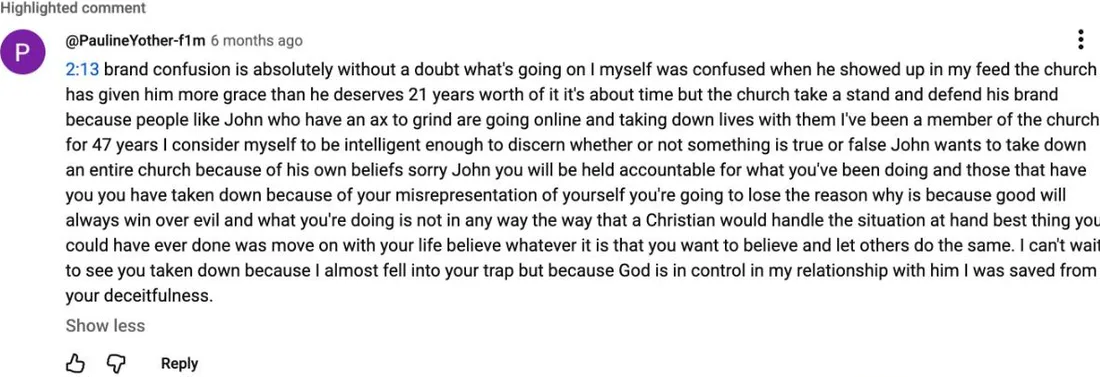
The court record isn’t the only place these accounts appear. The day the lawsuit was filed, Latter-day Saint creator Jasmin Rappleye covered it in a YouTube livestream. In its comment section, 110 people described confusion about Mormon Stories, their own or someone else’s, and we saved a screenshot of each. Four more people posted similar accounts on X, and seven commented on Instagram or on Mormonism Explained’s own posts. Of the 121, 118 describe their own experience and three describe someone else’s.
None of these 121 accounts is part of the court record. Each was posted publicly, and each screenshot is shown in full, as posted.
The accounts
Each card quotes the person’s own words. Open a card to see the screenshot.
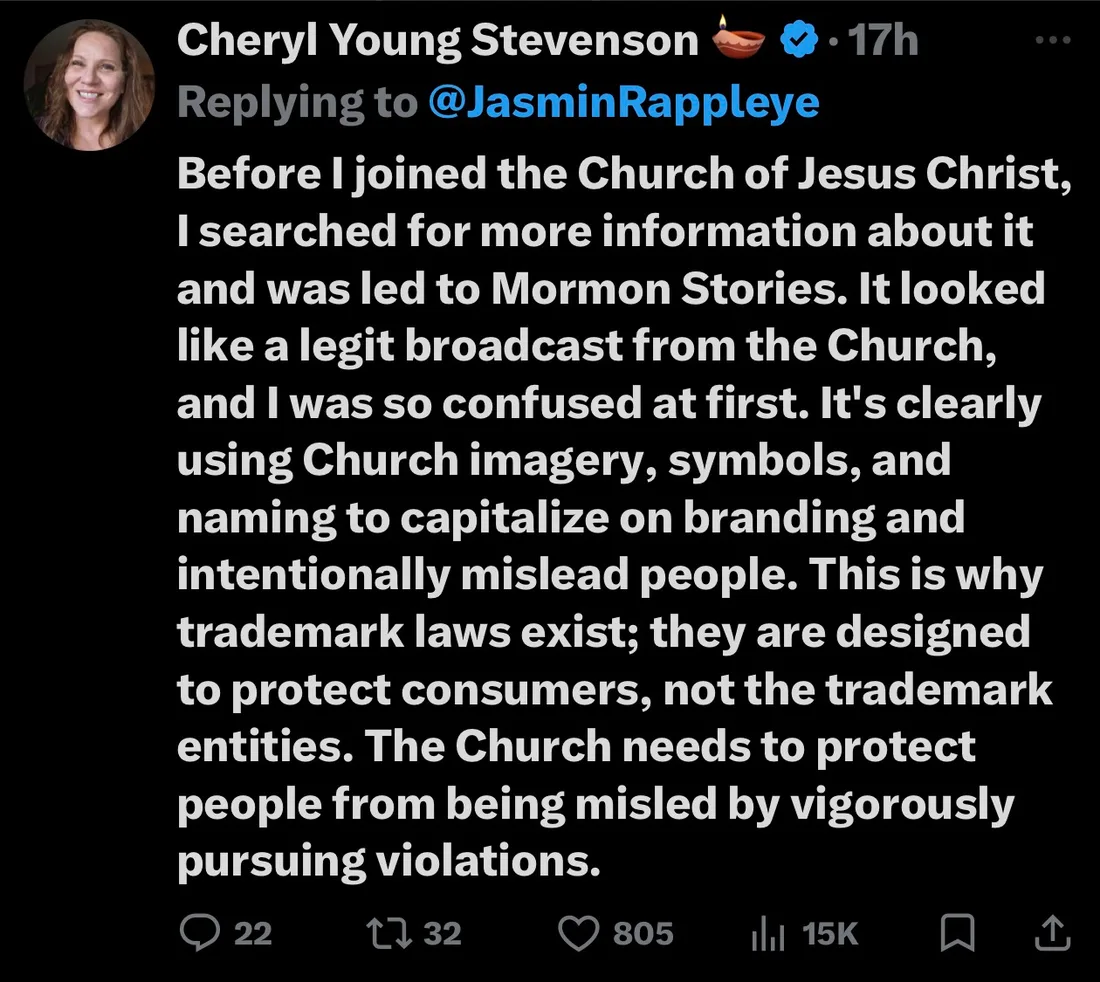
- X#111
Cheryl Young Stevenson
“It looked like a legit broadcast from the Church, and I was so confused …”
- X#112
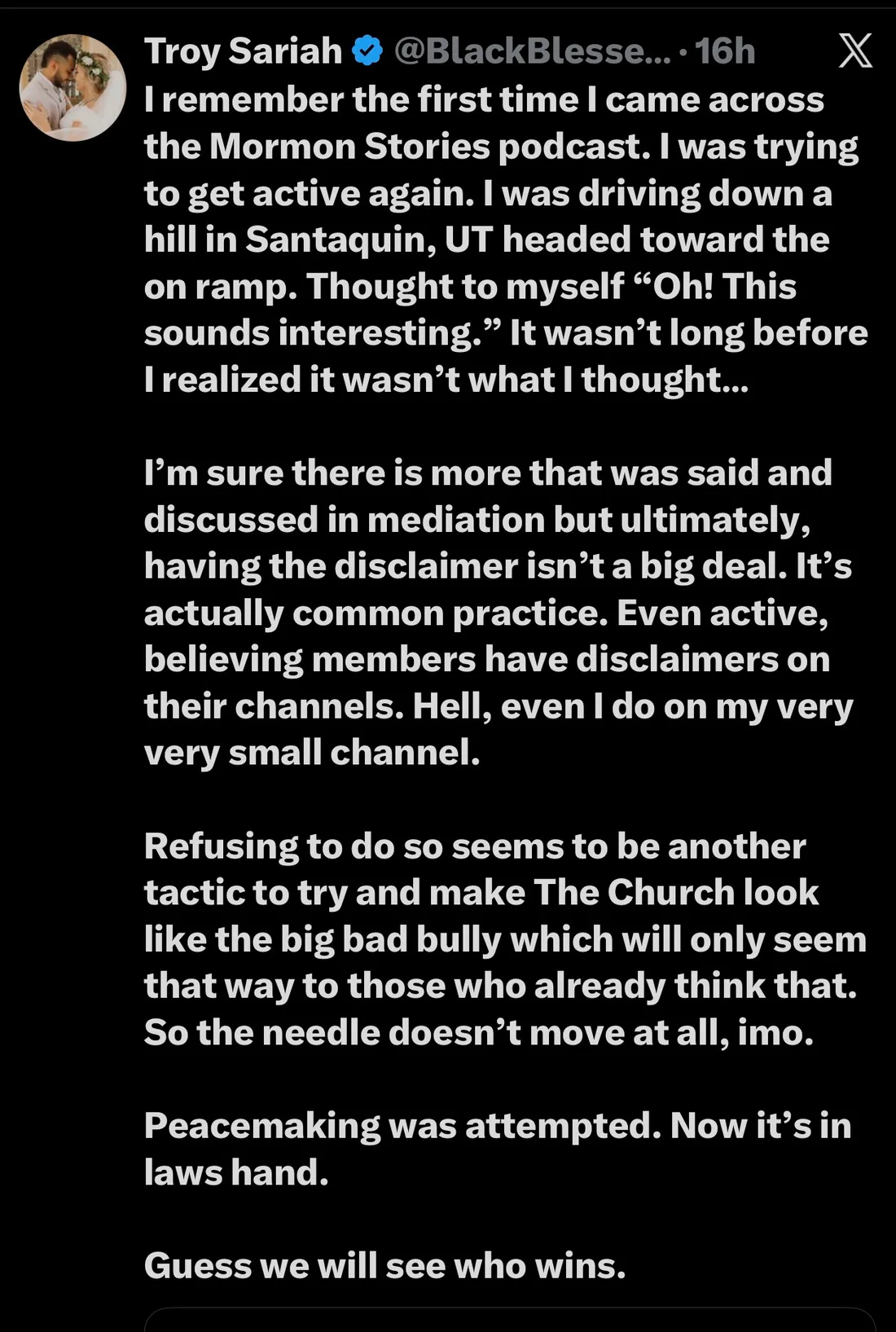
Troy Sariah
“It wasn’t long before I realized it wasn’t what I thought...”
- X#113
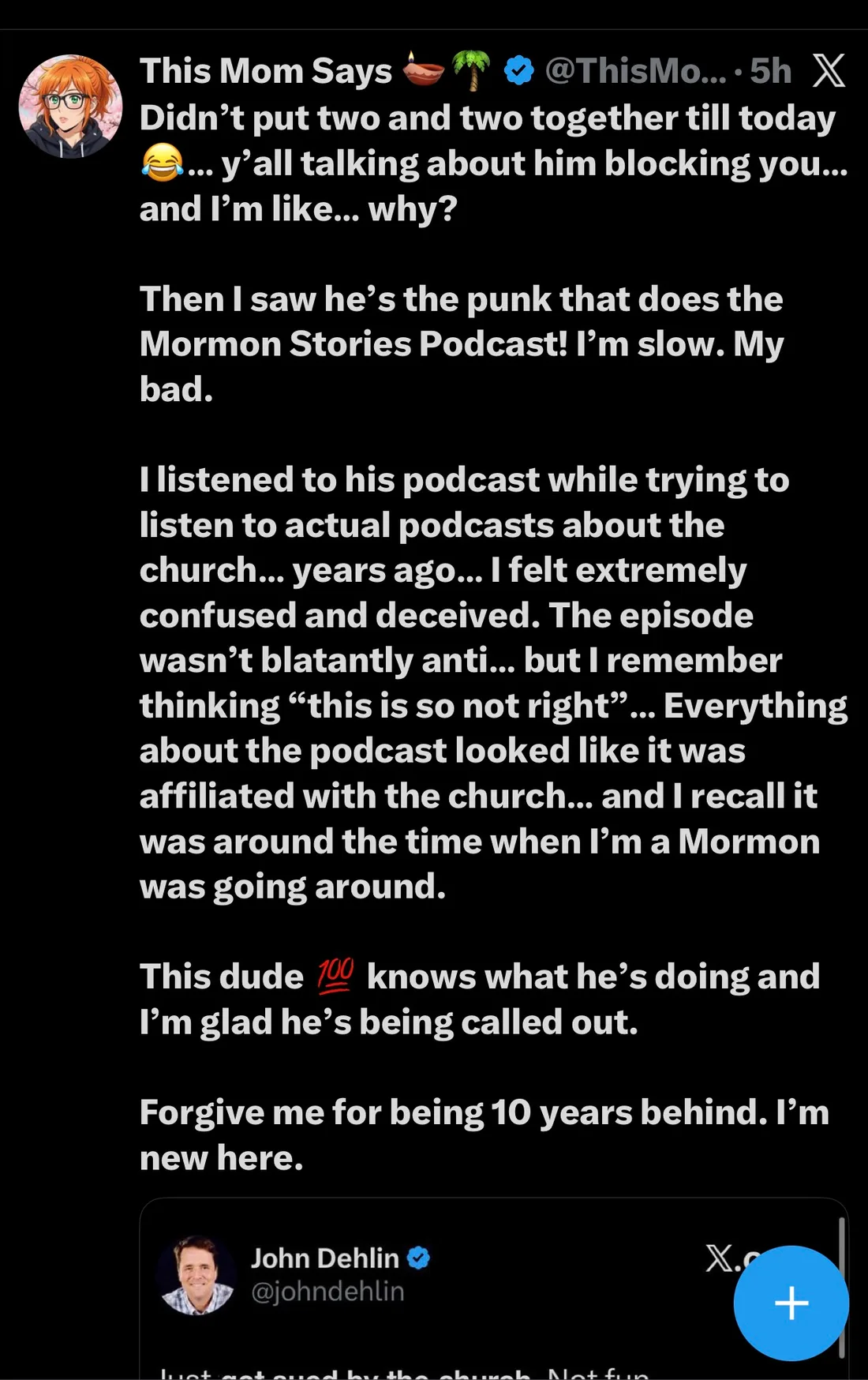
This Mom Says
“Everything about the podcast looked like it was affiliated with the church...”
- X#114
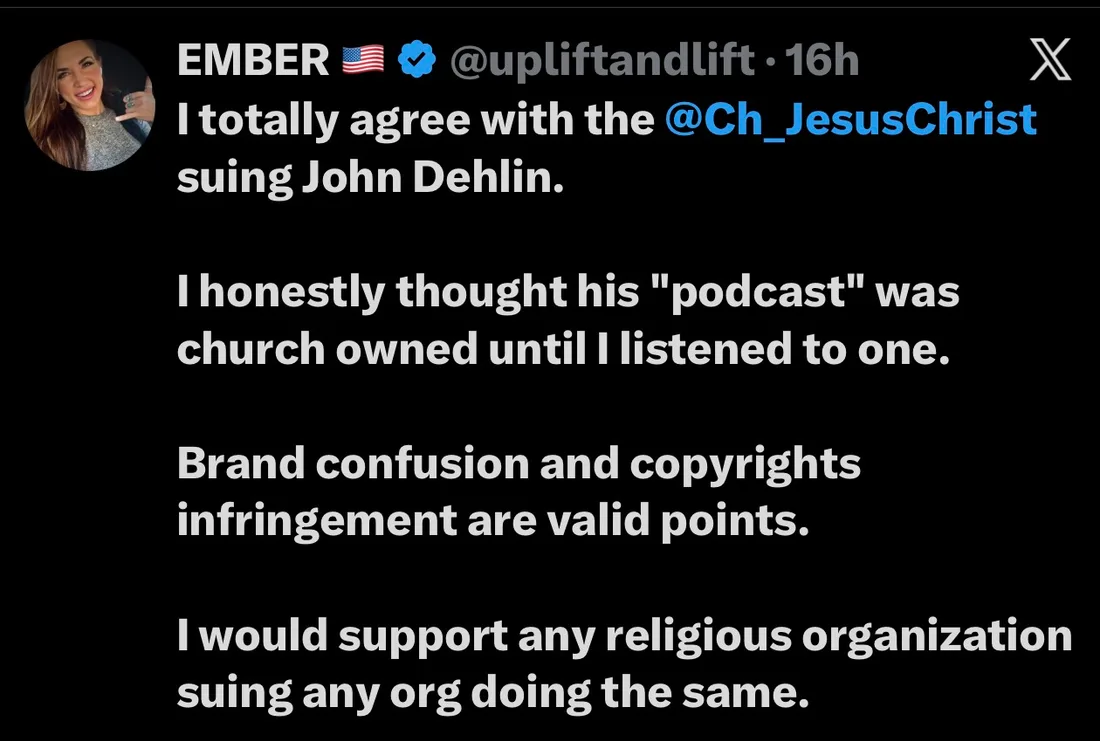
EMBER
“I honestly thought his “podcast” was church owned until I listened to one.”
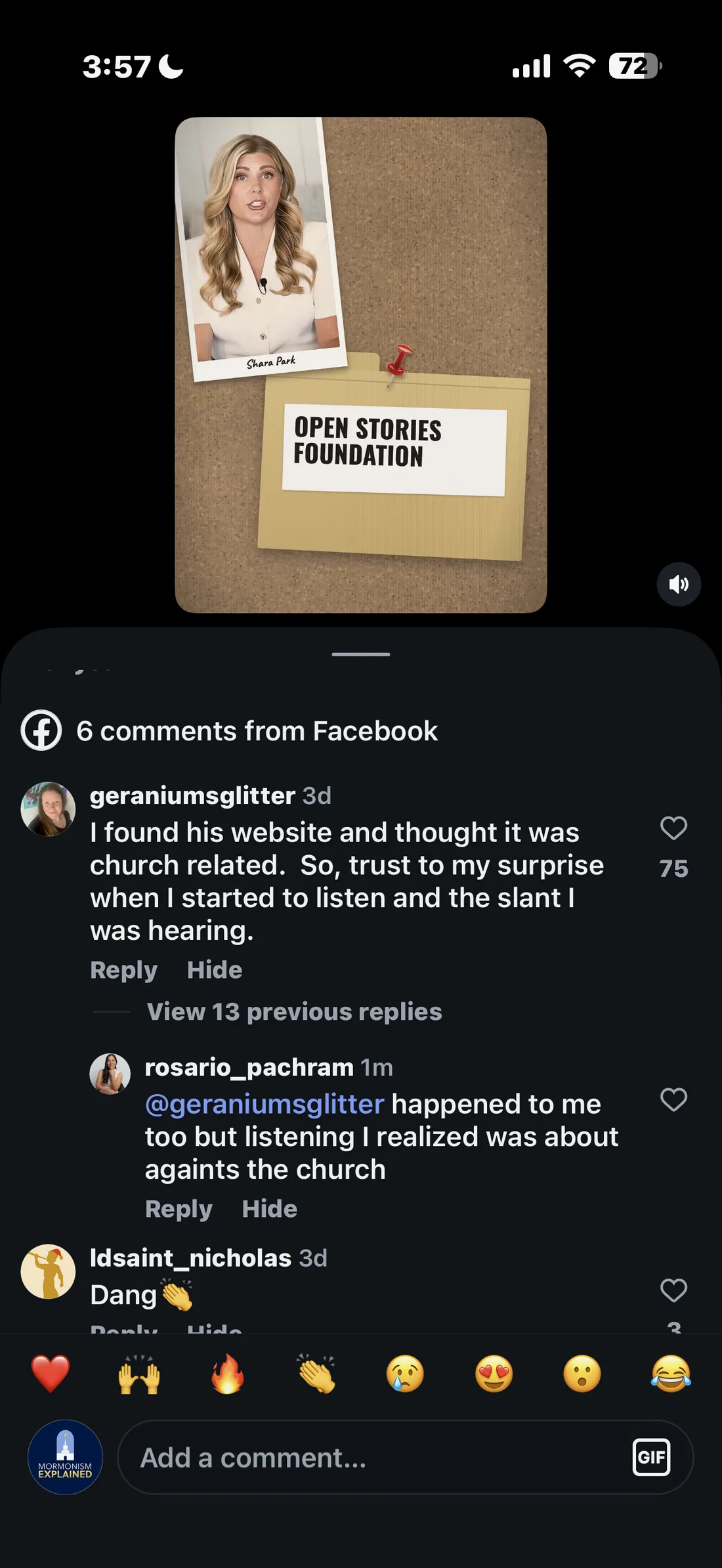
- Instagram#115
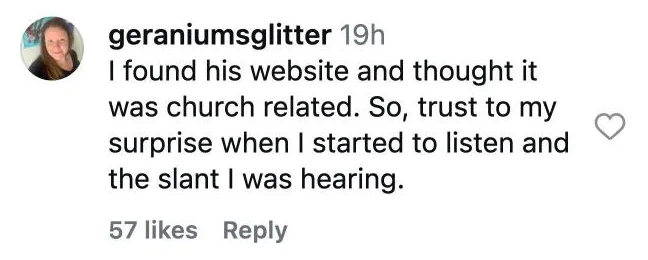
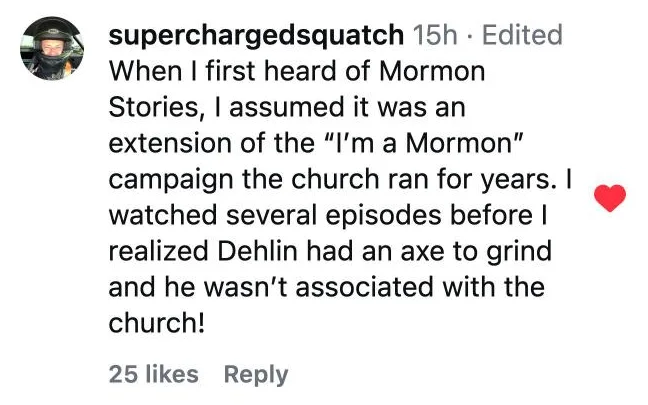
geraniumsglitter
“I found his website and thought it was church related.”
- Instagram#116
superchargedsquatch
“I assumed it was an extension of the “I’m a Mormon” campaign the church ran”
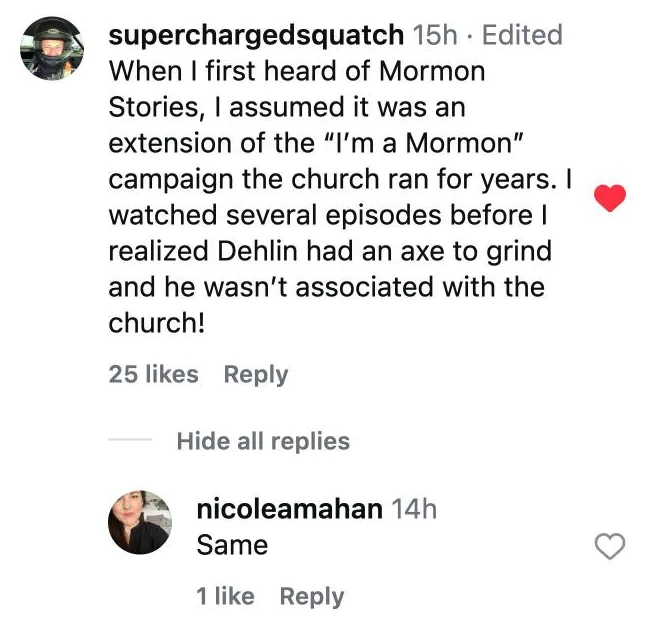
- InstagramReply in a thread#117
nicoleamahan
“Same”
- InstagramReply in a thread#118
rosario_pachram
“happened to me too but listening I realized”
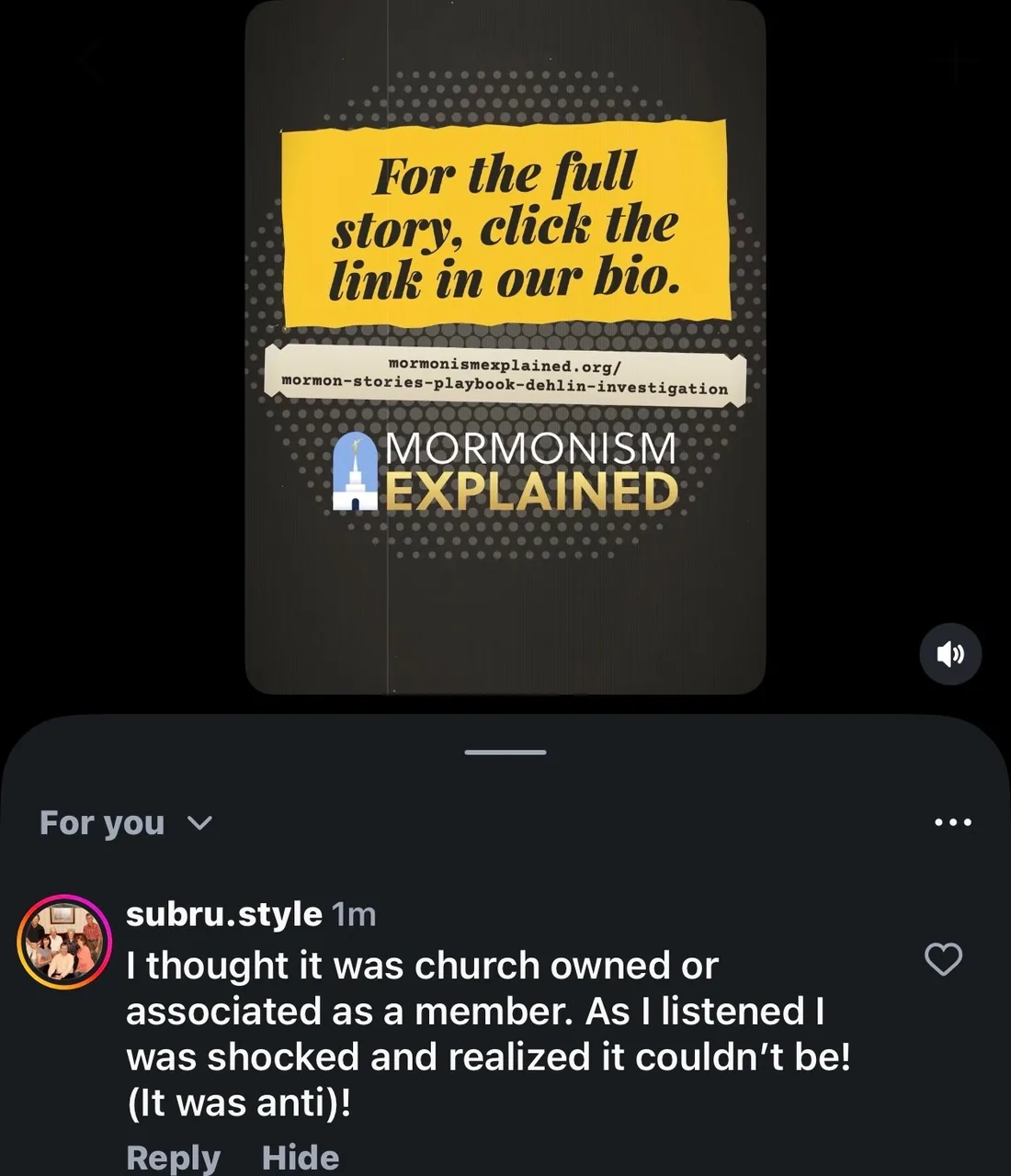
- Instagram#119
subru.style
“I thought it was church owned or associated as a member.”
Sources: posts on X; comments on Instagram and on Mormonism Explained’s YouTube and Instagram posts; comments on Jasmin Rappleye’s livestream “The ‘Unreasonable’ Demand That Got Mormon Stories Sued” (Apr. 17, 2026). Timestamps are as shown in each screenshot.
Accounts
What they say they thought
Accounts
What they say they thought
Accounts
What they say they thought
Accounts
What they say they thought
Accounts
What drew them in, when they say
Accounts
What drew them in, when they say
Accounts
What drew them in, when they say
Accounts
What drew them in, when they say
Some name more than one reason; most don’t say. Six place their experience before the December 2022 blue logo and two in 2026, after the logo changed. Seven were investigating the Church or newly baptized, five were returning to church and seven call themselves longtime members.
The case that it is confusion Contested
- Courts weigh real confusion heavily. The Tenth Circuit, whose law governs the Utah case, describes evidence of actual confusion as “often considered the best evidence of a likelihood of confusion.”
- The same sequence, over and over. The accounts describe what the complaint alleges: people looking for the Church or for faithful content found Mormon Stories and took it for what they were looking for, for minutes, hours or several episodes. Some subscribed before they realized. In 19 of the accounts, people point to the branding: the logo, colors, fonts or Church imagery.
- A first impression can count. The Tenth Circuit has recognized “initial-interest confusion,” a mistaken first impression that draws someone in even if it is cleared up later, though in a 2013 case it looked at how often that happened and found the rate too low to matter.
- The people the Church says it must reach. The complaint says the Church has to make sure members and others seeking information about it can tell what is official. Seven accounts here come from people who were investigating the Church or newly baptized, and five from people returning to church.
- Not only the old logo. Two accounts (#037, #081) describe confusion in 2026, after the logo turned orange. The Church also argues the show’s disclaimers are hard to find, and Jordan has said the Church still wants a spoken one because a history of confusion has taken hold.
What we can and can’t say Data gap
The confusion is real to the people describing it. The 15 comments in the complaint and the 121 accounts we collected tell a consistent story, often in nearly the same words: people came across Mormon Stories, many while looking for the Church or for faithful content, and took it for something it wasn’t. That is not a hypothetical, and it is not limited to the 2022 logo.
What the record can’t yet show is how common that experience is, or which part of the branding causes it. No survey has been filed. Whether it adds up to the kind of confusion the law will act on, against a show whose name the Church says Dehlin may keep, is for Judge Shelby to decide, and the November 24 hearing is about a different question.
Questions about Mormon Stories and the Church
Is the Mormon Stories podcast affiliated with The Church of Jesus Christ of Latter-day Saints (the LDS Church)?
Is there evidence people confused Mormon Stories with the Church?
When did Mormon Stories change its logo?
How we counted
Coding. We read every screenshot in our files and coded each person once, from their own words: what they say they thought, what they say drew them in, and when and who they were, only when they say so. A person with several screenshots appears once. Excerpts are verbatim, 15 words or fewer; all-caps text is set in sentence case. Counts are ours, not the court’s, and other readers could code borderline comments differently; every card links to its screenshot so you can check.
What we left out. Two follow-up comments from one person are not shown because they describe that person’s health, and two screenshots in our files that are not firsthand accounts are not shown. See an error? hello@mormonismexplained.org.
Legal sources. Complaint (Dkt. 1) ¶¶ 47, 48, 54; opposition (Dkt. 71); reply (Dkt. 73); notice and Exhibit L (Dkt. 75). Hornady Mfg. Co. v. DoubleTap, Inc. (10th Cir. 2014). 1-800 Contacts, Inc. v. Lens.com, Inc. (10th Cir. 2013).