
Mormonism Explained
Are Mormons Christians?
Biblical vs. Creedal Christianity, Explained
The Short Answer
Are Mormons Christians?
Yes — Mormons are Christians by the original meaning of the word. Mormons, members of The Church of Jesus Christ of Latter-day Saints, worship Jesus Christ as the divine Son of God and the only Savior of the world. They are not creedal Christians, because they reject the Nicene Creed’s definition of God as one substance in three persons. The whole debate comes down to that one distinction: biblical Christian versus creedal Christian.
Key Takeaways
- It’s a definitions question. “Christian” has two meanings — a follower of Christ (biblical) and one who affirms the Nicene Creed (creedal). The answer flips depending on which you use.
- By the biblical definition, yes — clearly. Mormons worship Jesus Christ as the divine Son of God and only Savior, and build their worship, scripture, and ordinances around Him.
- By the creedal definition, no — and they’ve never claimed to be. The Church rejects the one-substance Trinity of the post-biblical creeds.
- The creed came late. The Nicene test was written about 300 years after the cross and enforced by emperors — a history that still shapes who gets called “Christian.”
- Bottom line: Mormons are best described as biblical Christians, not creedal Christians — a question about words before it’s a question about faith.
Are Mormons Christians? It is one of the most-searched questions about the faith, and it trends again every few months — usually when someone posts a religious-affiliation form or a “list of Christian churches” that files The Church of Jesus Christ of Latter-day Saints separately from the rest. Here is the part almost no one says out loud: the disagreement is not really about whether Mormons follow Jesus Christ. It is about which definition of the word Christian you are using — and there are two.
The Whole Debate, Explained
Definition 1 – Biblical
How Jesus defined being a Christian
“A Christian is a follower of Jesus Christ.”
By this meaning, Mormons are unambiguously Christian. They worship Jesus Christ as the divine Son of God and the Savior of the world.
Definition 2 – Creedal
How Constantine’s council defined being a Christian
“A Christian affirms the Nicene Creed.”
By this meaning – God as three persons of one substance – Mormons fall outside, and they have never claimed otherwise.
Same word, two definitions. Almost every argument about this is really an argument about which one counts.
Do Mormons believe in Jesus Christ?
Definition One – The Biblical Test
Yes. Mormons believe Jesus Christ is the divine Son of God and the only source of salvation. That is the first definition of Christian, and the oldest one: the word was coined to describe the followers of Jesus — the “anointed one,” the Messiah. By that test, the question answers itself.
It is the name on the door: The Church of Jesus Christ of Latter-day Saints. Mormons are baptized in His name, take the sacrament in His name, and pray in His name. Their second volume of scripture, the Book of Mormon, is subtitled “Another Testament of Jesus Christ”, and its stated purpose, printed on the title page since 1830, is to convince all people that Jesus is the Christ. A Book of Mormon prophet summed up the faith’s center of gravity in one line: “We talk of Christ, we rejoice in Christ, we preach of Christ” (2 Nephi 25:26). On the Church’s own terms, the testimony of the Apostles and prophets that Jesus died, was buried, rose the third day, and ascended is the fundamental principle of the religion — everything else, Joseph Smith said, is only an appendage to it.
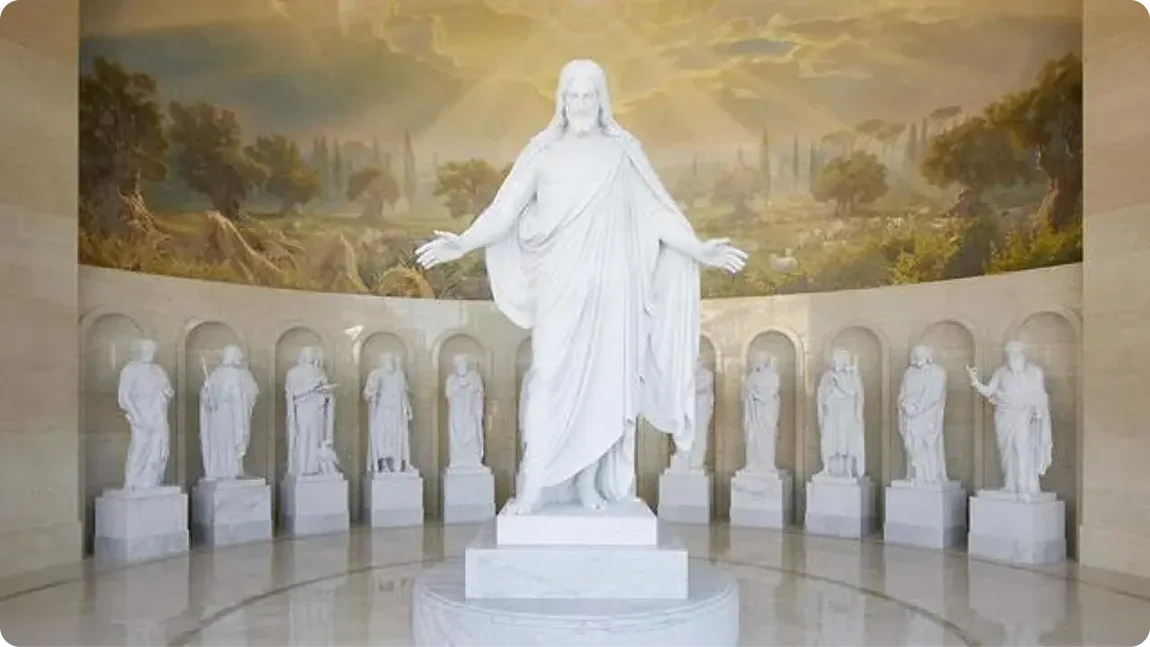
What Mormons Believe About Jesus
They worship Him as the divine Son of God and the Savior of the world.
John 20:28 • 2 Nephi 25:29
The Book of Mormon’s own subtitle: “Another Testament of Jesus Christ.”
Book of Mormon title page
They pray, baptize, and take the sacrament in the name of Jesus Christ.
3 Nephi 18:7–11 • John 16:23
They believe He is Jehovah of the Old Testament – the Creator under the Father.
Exodus 3:14 • John 8:58
Do Mormons believe in the Trinity?
Definition Two – The Creedal Test
Here is the second definition — the one doing the real work whenever Mormons get left off a “Christian” list. Under it, Christian means a person who affirms the doctrine of God worked out by the church councils of the fourth and fifth centuries — above all the Nicene Creed of A.D. 325, which defines the Father, Son, and Holy Spirit as three persons of one indivisible substance.
Mormons believe in God the Father, His Son Jesus Christ, and the Holy Ghost — but not in the creedal version of the Trinity. The Church teaches that the three are distinct persons, united in purpose rather than one substance (Doctrine and Covenants 130:22; 3 Nephi 11:27). The Church’s official statement, “Are Latter-day Saints Christian?” says it plainly: the label “Christian” is often tied to creedal claims which the Church does not adopt. Rejecting those post-biblical creeds is, by the Church’s own description, one of its distinguishing features. So by the creedal definition, Mormons are not creedal Christians — and they have never claimed to be.
Why don’t some churches consider Mormons Christian?
Where the Boundary Actually Gets Drawn
Because those churches are using the second definition — and notice where it draws the boundary. It draws it at a council that met in A.D. 325, nearly three centuries after Jesus and the Apostles.
That timing is the heart of the matter. If “Christian” requires assent to the one-substance formula of Nicaea, then the line of orthodoxy runs through a fourth-century creed, not through the first-century ministry it claims to describe. Jesus, who prayed to His Father — most fully in John 17, addressing the Father as a distinct person — and the Apostles who heard Him do it, lived and died long before that formula existed.
What the Bible Shows — and When the Creed Came
c. AD 30 • During Jesus’ ministry
Jesus Prays to His Father
Again and again, the Son addresses the Father as a distinct person: the model prayer, Gethsemane, the raising of Lazarus, the great intercessory prayer, and from the cross. A Son who prays to a Father is two persons in a relationship — not one undivided substance.
Matt. 6:9 · Matt. 26:39 · John 11:41 · John 17:1 · Luke 23:34, 46 · John 12:27–28
c. AD 33 • The crucifixion
Jesus Dies – Still Praying to His Father
From the cross: “Father, into thy hands I commend my spirit.” This is the moment the clock starts. Everything that will later define a “creedal Christian” is still nearly three centuries away.
c. AD 33+ • The early church
Jesus’ Followers are Called “Christians”
The name appears first at Antioch, then before King Agrippa, then in Peter’s letter. “Christian” meant one thing: a follower of Christ. That biblical definition predates every creed.
New Testament era
Believers are Called “Saints”
Paul addresses the churches as “saints” — simply the New Testament word for Christ’s followers, and the same word behind the Church’s own name today.
Rom. 1:7 · 1 Cor. 1:2 · Eph. 1:1 · Phil. 1:1
AD 325 • About 300 years after the cross
The Council of Nicaea Writes the Creed
Constantine convenes and funds the council. The vote is lopsided — all but two of ~300 bishops sign. The creed defines the Son as “of one substance” (homoousios) with the Father — a word found nowhere in the Bible.
AD 327-336 • The reversal
The Emperor Changes His Mind
Constantine recalls Arius from exile and banishes Athanasius — who will be exiled five times by four emperors. For ~50 years the empire’s official theology flips with each throne; for much of it, Arianism is dominant in the East.
Athanasius, five exiles · Constantius II, Valens (Arian)
AD 380-381 • Made law
Theodosius Makes the Trinity the Law of the Empire
The Edict of Thessalonica makes Nicene Trinitarian Christianity the state religion and brands the alternatives heresy; the Council of Constantinople (381) gives the creed its final form. Dissent is now a civil offense.
Edict of Thessalonica, 380 · First Council of Constantinople, 381
AD 385 • The first blood
The First Christian Executed for Heresy
Priscillian of Ávila is beheaded at Trier — the first Christian put to death over doctrine. (The execution was under the usurper Magnus Maximus on a charge of sorcery, and leading bishops — Ambrose, Martin of Tours — protested it.)
c. 5th century • The test of salvation
The Athanasian Creed
A Latin creed — written well after Athanasius died, and not by him — sets out the Trinity in full and warns that whoever does not keep this faith “whole and undefiled” will “without doubt … perish everlastingly.” Belief in the Trinity is now the test of who is saved.
The Point
The creed that decides who counts as a “creedal Christian” wasn’t handed down by Jesus or the apostles. It was written about 300 years after the cross and made binding by emperors — secured, when agreement didn’t come on its own, through exile, fire, and finally the sword.
What the First Believers Actually Called Themselves
Disciple(s)
230+
By far the most common term — but only in the Gospels and Acts. It never appears in the Epistles.
Throughout the Gospels & Acts
Saint(s)
96
The word the apostles used in their letters for Christ’s followers — and the word behind the Church’s own name today.
Rom. 1:7 · 1 Cor. 1:2 · Eph. 1:1 · Phil. 1:1
“The Way”
6
The earliest movement’s name for itself — the followers of “the Way.”
Christian(s)
3
The rarest term — and the only one that began as an outsider’s label: a narrator’s report, a pagan king, and a charge to suffer “as a Christian.”
The first believers had at least four names for themselves — and “Christian,” the word later used to mark the boundary of orthodoxy, was the rarest of all, and the only one that started as an outsider’s label.
Counts follow the King James Version and are approximate; the three occurrences of “Christian” are exact. “Disciple” appears only in the Gospels and Acts.
What the Followers of Christ Have Been Called
From Moses to the Latter-Day Saints
The Old Testament
(c. 1400 – 500 BC)
c. 1400 BC · Moses’ blessing
“Saints” — The Holy Ones
The thread begins with Moses: the word first appears in his final blessing and names God’s covenant people, those set apart to Him. David sings it throughout the Psalms; Daniel uses it of the people of God.
The New Testament
(c. AD 30 – 65)
c. AD 30–33 · Jesus’ ministry
“Disciples”
During Jesus’ ministry and the earliest church, followers are overwhelmingly called disciples — learners of a master. The term appears only in the Gospels and Acts, never in the Epistles.
c. AD 34 · The early church
“The Way”
The earliest movement’s own name for itself: the followers of “the Way.” Saul carries letters against those “of this way”; Paul later admits he persecuted “this way unto the death.”
c. AD 44 · Antioch
“Christians”
An outsiders’ label, coined in Antioch — the word the believers did not choose for themselves. A narrator reports it, the pagan king Agrippa uses it, and Peter turns it back: suffer “as a Christian,” unashamed.
c. AD 50–65 · Paul’s letters
“Saints” — Revived
Writing to the churches, Paul reaches back past every newer label to the oldest one: he greets believers as saints — the same Old Testament word for the set-apart people of God, now the most common name in the Epistles.
After the Apostles
(AD 325 – 1800s)
c. AD 325–451 · The creeds
“Christian” Becomes the Test
As the councils define orthodoxy, the rare outsider word hardens into the official boundary term: to be counted a Christian now means to affirm the creed. The label coined at Antioch becomes a gatekeeper.
The centuries that follow
“Saint” Narrows to a Few
In the Western church, saint gradually comes to mean a canonized individual rather than every believer. The plain New Testament sense — that all the faithful are saints — quietly falls out of everyday use.
The Restoration
(AD 1830 – 1838)
April 6, 1830
“The Church of Christ”
The restored Church is organized as the Church of Christ — named, like the disciples, for the One they follow.
May 3, 1834
“The Church of Latter Day Saints”
By a conference vote, the ancient word returns: members are again Saints — now the latter-day saints, the set-apart people of God in the last days.
April 26, 1838 · Far West, Missouri
“The Church of Jesus Christ of Latter-day Saints”
By revelation, the two oldest names in the whole thread are joined: Jesus Christ — the One the disciples followed — and Saints, the holy ones of Deuteronomy and the Psalms. The full name the Church still carries today.
The Point
The answer is hiding in the Church’s own name. It carries Jesus Christ — the One the first disciples followed and worshipped — alongside Saints, the New Testament word for His people that runs back through Paul to Moses. The name reaches past the fourth-century creed and revives the two oldest titles in scripture. Not a creedal Christian — but a Christian in the original sense, and a Latter-day Saint in the most ancient one.
Counts follow the KJV and are approximate; Old- and New-Testament dates are traditional. Restoration dates: organized April 6, 1830; renamed May 3, 1834; full name by revelation April 26, 1838.
The point is not that the early disciples would flunk a doctrine test. It is that any definition of Christian narrow enough to exclude a Christ-worshipping church is worth examining for what it actually measures: devotion to Jesus, or agreement with a later council. This is why Mormons describe themselves as biblical Christians, not creedal Christians — inside the Christ-following definition, outside the Nicene one.
Where the Creed Came From — and What it Took to Enforce It
The History Behind the Boundary
For the first three centuries after Jesus, Christians had no single official definition of how the Son related to the Father. They discussed it, disagreed about it, and used a wide range of language. No creed bound the whole church, and that absence was simply normal.
The argument came to a head in early-fourth-century Alexandria. A priest named Arius taught that the Son, though exalted above all creation, was brought into being by the Father — subordinate, and not eternal. His opponents, led by Bishop Alexander and the deacon Athanasius, insisted the opposite: the Son was fully God, equal to the Father, without beginning. Same Scriptures; opposite conclusions — and in places the dispute spilled into public unrest.
In 325, the emperor Constantine intervened. He had just reunified the empire by war, he was not yet baptized (that waited until his deathbed, twelve years later), and his stated goal was unity, not theology. He summoned the bishops to the First Council of Nicaea, funded it, and presided over its opening. The vote was lopsided: of roughly 300 bishops, all but two signed the statement condemning Arius. The creed defined the Son as “of one substance” with the Father — homoousios, a Greek word that appears nowhere in the Bible. That single word is the foundation of the creedal Trinity.
What is told less often is what came next. Constantine exiled Arius and the two bishops who refused to sign, ordered Arius’s writings burned, and — according to the fifth-century church historian Socrates Scholasticus — decreed death for anyone caught concealing one of those books. Agreement was now enforced by the state.
And even that did not settle it. Within a few years Constantine reversed himself, recalling Arius and exiling Athanasius — the champion of the Nicene position, who would be banished five times by four emperors. For most of the next fifty years the empire’s official theology swung with whoever held the throne; for much of that period Arianism was the dominant theology of the Eastern empire. Which view counted as “orthodox” depended, in practice, on who was emperor.
It was finally locked in by force. In 380 the emperor Theodosius issued the Edict of Thessalonica, making Nicene Trinitarian Christianity the state religion and branding the alternatives heresy; the Council of Constantinople (381) gave the creed its final form. In 385 a bishop, Priscillian of Ávila, was beheaded at Trier — commonly called the first Christian executed for heresy. The case deserves precision: it was carried out under the usurping emperor Magnus Maximus, the formal charge was sorcery, and leading churchmen — Ambrose of Milan, Martin of Tours, and Pope Siricius — protested it. But a line had been crossed.
The starkest version of the test was written last. Around the fifth century — well over a hundred years after Athanasius died, and not by him — a Latin statement now called the Athanasian Creed made Trinitarian belief the test of salvation, warning that whoever does not keep this faith “whole and undefiled” will “without doubt … perish everlastingly.”
To be fair to the other side, creedal Christians do not see this as inventing a doctrine; they argue the councils clarified what Scripture already taught, and that political messiness does not make a conclusion false. Whether the Trinity is biblically true is a separate question from how it was enforced.
But the history answers the narrower question this article is about. When the creedal definition of “Christian” is used to rule someone out, it is worth remembering where that definition came from — not from Jesus, who prayed to His Father, nor from the apostles, whose followers were called “Christians” and “saints” long before any creed, but from fourth- and fifth-century councils and emperors who needed a divided empire to agree, and who secured it with exile, fire, and finally the sword.
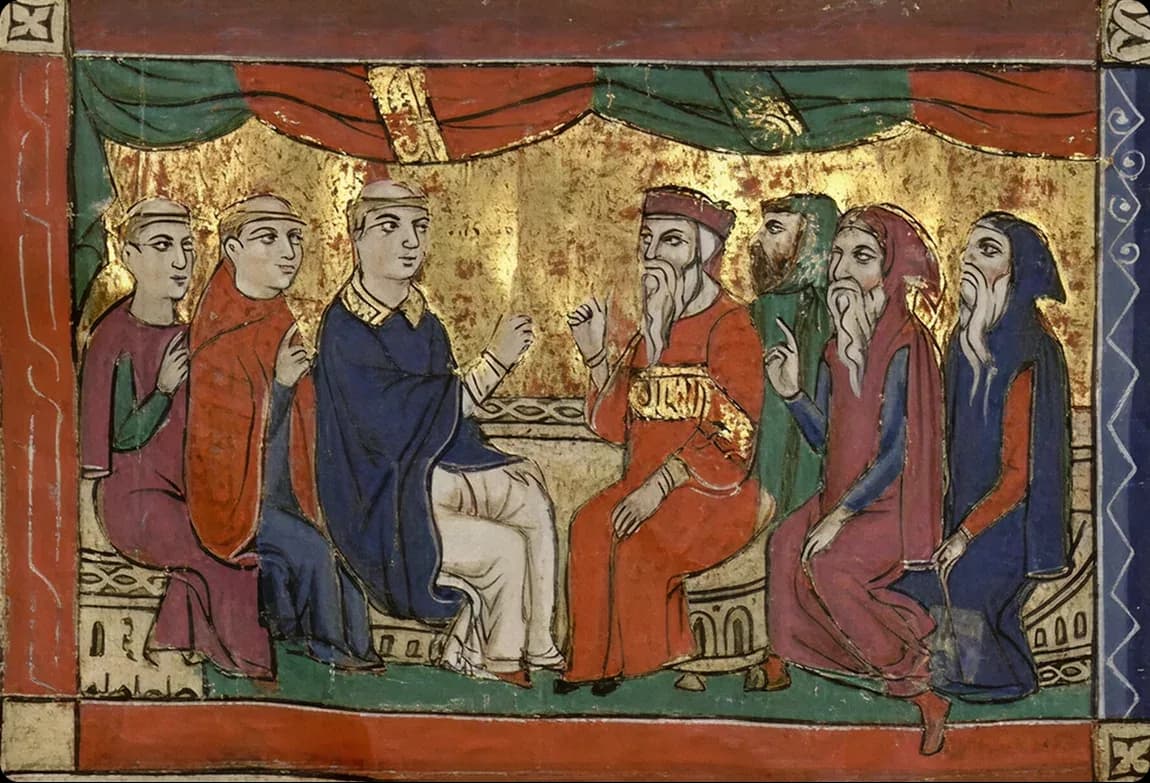
State-Sanctioned Persecution in America
When the State Polices Belief
The creed outlived the empire that produced it — but so did the principle behind its enforcement: that there can be an official, state-backed boundary around acceptable belief, and that the people outside it can be removed by force. To see how far that principle traveled, skip ahead almost fifteen centuries, to Missouri.
Latter-day Saints began gathering there in the 1830s, having identified Jackson County as a sacred place of gathering. Their growing numbers, their tendency to vote as a bloc, their largely Northern views on slavery, and their claim to the land set them sharply against their neighbors. By 1833 mobs had driven them out of Jackson County; in 1836 the legislature carved out Caldwell County to contain them. It did not hold — when Latter-day Saints tried to vote at Gallatin in 1838 they were attacked at the polls, and the violence spiraled into open conflict.
After the armed clashes of that 1838 “Mormon War,” Governor Lilburn Boggs issued Missouri Executive Order 44 on October 27, 1838, directing that the Mormons “must be treated as enemies, and must be exterminated or driven from the State if necessary for the public peace.” A state government had committed to writing an order to expel or kill a religious minority. Latter-day Saints were driven from Missouri entirely; the order was not formally rescinded until 1976 — 138 years later — when Governor Kit Bond apologized on the state’s behalf for “the injustice and undue suffering” it had caused.
Missouri Executive Order 44 • October 27, 1838
“The Mormons must be treated as enemies, and must be exterminated or driven from the State…” – Governor Lilburn Boggs.
It stayed on the books for 138 years, rescinded only in 1976.
It would be too neat to say the Nicene Creed caused this. Missouri’s hatreds were mostly political, economic, and cultural; few in those mobs could have defined the Trinity, let alone fought over it. But the underlying logic was the one the creeds had made respectable centuries earlier — that orthodoxy can be fixed by authority and enforced by power, and that a group judged to be the wrong kind of Christian forfeits the protection extended to the right kind. Different motives; the same machinery. Define the orthodox, name the outsider, and let the state do the rest.
That is why the definitional question in this article is not academic. “Are Mormons Christians?” is usually a quiet matter of lists and labels. But within the lifetime of the American republic, it was answered with an extermination order. The stakes of who gets to draw the line around “Christian” — and what they may do to those left outside it — are not hypothetical.
The Real Differences — Which Mormons Don’t Hide
An Honest Answer Names the Gap
A credible answer has to be honest: the gap is real, and it matters to creedal Christians. Mormons differ from creedal Christianity in three main ways.
The Nature of God.
The Father, Son, and Holy Ghost are three distinct persons united in purpose — not one being in three persons. The Church teaches the Father has a glorified body and even weeps (Moses 7:28–33).
Apostasy & Restoration.
Mormons hold that authority and certain teachings were lost after the Apostles died and were restored through Joseph Smith — which is why the Church identifies as a restoration of the New Testament church, neither Catholic nor Protestant.
An Open Canon.
Mormons accept the Bible as the word of God, alongside the Book of Mormon, the Doctrine and Covenants, and the Pearl of Great Price. For traditions built on sola scriptura — the Bible alone — that is a defining break.
The Church states all of this openly. Its position is not that there are no differences; it is that these differences do not disqualify Mormons as Christians but ground their faith in Jesus Christ.
The Case That Mormons Aren’t Christian
An Honest Answer Names the Gap
For many creedal Christians, the creeds are not an optional add-on — they are the property line of the faith. In that view, the Trinity is simply the biblical doctrine of God stated correctly, and a church that rejects “one substance” and adds scripture beyond the Bible is describing a different God, however sincere its devotion to Jesus. From inside that framework, leaving Mormons off the list is not an insult; it is a boundary marker doing its job. Understanding the Mormon position does not require pretending that objection is empty — only seeing that it, too, rests on the second definition.
So — Are Mormons Christians?
The Honest Answer
By the original, Christ-centered meaning of the word: yes, unambiguously. Mormons worship Jesus Christ as the divine Son of God and the only source of salvation, and they build their entire religious life around Him.
By the creedal, Nicene meaning: no — and they have never claimed otherwise. Mormons are biblical Christians, not creedal Christians.
The real disagreement is far narrower than the headline suggests. It is not a fight about whether to follow Jesus; it is a disagreement about a fourth-century definition of God’s nature. So the next time The Church of Jesus Christ of Latter-day Saints shows up on a form under its own heading, you will know what you are looking at: not a verdict on faith in Christ, but a definition quietly doing the work.
Frequently Asked Questions
Are Mormons Christians?
Yes, by the original meaning of the word. Members of The Church of Jesus Christ of Latter-day Saints worship Jesus Christ as the divine Son of God and only Savior, and the Church identifies itself as devoutly Christian. The disagreement arises only under a second definition that requires accepting the post-biblical creeds; Latter-day Saints are biblical Christians, not creedal Christians.
Why aren’t Mormons considered Christian by some churches?
Because those churches define “Christian” as affirming the Nicene Creed of A.D. 325, which teaches that Father, Son, and Holy Spirit are one substance. Latter-day Saints teach instead that they are three distinct persons united in purpose, so they do not meet that creedal definition even though they worship Jesus Christ.
What is the difference between a biblical Christian and a creedal Christian?
A biblical (Christ-following) Christian is defined by faith in and devotion to Jesus Christ. A creedal Christian is defined by acceptance of the doctrines of the fourth- and fifth-century councils, especially the one-substance Trinity of the Nicene Creed. Latter-day Saints fit the first definition but not the second.
Do Mormons believe in Jesus Christ?
Yes. Latter-day Saints believe Jesus Christ is the divine Son of God and the Savior of the world, and that salvation comes only through faith in Him. They are baptized, take the sacrament, and pray in His name, and the Book of Mormon is subtitled Another Testament of Jesus Christ.
Do Mormons believe in the Trinity?
Latter-day Saints believe in God the Father, His Son Jesus Christ, and the Holy Ghost, and that they are one in purpose. They do not accept the creedal definition that the three are one substance; they teach that they are three distinct persons (Doctrine and Covenants 130:22).
Why was the Church left off a list of Christian churches?
Usually because the list classifies churches by creedal tradition (Catholic, Orthodox, Protestant), and the Church belongs to none of those — it identifies as a restoration of the New Testament church, neither Catholic nor Protestant. Being listed separately reflects that historical category, not a judgment about whether members follow Jesus Christ.
Do Mormons believe Jesus and Satan are brothers?
Only in the narrow sense that Latter-day Saints believe all spirits are children of God the Father, which makes Lucifer a spirit son of Heavenly Father. It does not mean they are equals. Apostle David A. Bednar teaches that there was one plan — the Father’s — and that Lucifer rebelled against it rather than offering a rival plan. The Church’s official statement describes Satan as a fallen angel, diametrically opposite from Christ in every attribute, while Christ alone is the Only Begotten Son, the Savior and Redeemer of mankind.
Yes, by the Bible’s definition. No, by the creeds’ –– which Mormons never adopted.
“Are Mormons Christians?” Is a question about words before it’s a question about faith.
Quick Verdicts
From the DM’s • Ten Yes-or-No Questions
You asked. Here’s the sourced answer. Deep-theology questions rarely have honest one-word answers — so here’s the straight version of each, with a verdict and citations.
1. Do Mormons believe God the Father was once a human?
VERDICT: TAUGHT — BUT LARGELY UNREVEALED.
Joseph Smith’s 1844 King Follett sermon taught that God “was once as one of us,” and Lorenzo Snow’s couplet put it as “As man now is, God once was.” But the Church’s own Becoming Like God essay is candid: “Little has been revealed about the first half of this couplet, and consequently little is taught.“ President Hinckley, asked directly, said it gets into “pretty deep theology that we don’t know very much about.“ The sermon itself is not canonized scripture. So: part of the tradition, but the Church teaches almost nothing concrete about it.
King Follett Sermon (1844) · Becoming Like God (Gospel Topics essay)
2. Do Mormons believe God the Son was created?
VERDICT: NO.
Latter-day Saints teach that Jesus Christ is Jehovah, the God of the Old Testament — the Creator, “from all eternity to all eternity“ (Mosiah 3:5), ”the beginning and the end, the first and the last“ (Alma 11:38–39). The intelligence at the core of each being, Christ’s included, “was not created or made“ (D&C 93:29). Mormons call Him the “firstborn” in the spirit, but as Jehovah the Creator He is eternal and uncreated — not a created being.
Mosiah 3:5 · Alma 11:38–39 · D&C 93:29
3. Do Mormons believe Jesus and Satan are spirit brothers?
VERDICT: YES — BUT IN NO WAY EQUALS.
Technically yes — but only in the narrow sense that all spirits are children of God the Father, which makes Lucifer a spirit son of Heavenly Father who led the premortal rebellion. Critics use “brothers” to imply equality; the doctrine implies the opposite. Apostle David A. Bednar, writing in the January 2026 Liahona, corrects the usual misconception: there was one plan — the Father’s — not two competing plans. Lucifer did not lose a vote; in Bednar’s words, “He is not a sympathetic figure who lost an election. He rebelled!“ (Moses 4:3–4). The Church’s official statement is just as direct: Satan is “a fallen angel, diametrically opposite to Christ in every attribute,“ while Christ alone is the Only Begotten Son, Savior, and Redeemer. So: brothers only in the sense that all beings share one Father — never equals, peers, or moral counterparts.
Moses 4:3–4 · Liahona, Jan 2026 (Bednar) · Newsroom statement
4. Do Mormons believe Jesus wasn’t God at any point in His life?
VERDICT: NO — HE WAS ALWAYS GOD.
The 1916 First Presidency doctrinal statement holds that Christ was and is God — known as Jehovah in His premortal state, during His mortal life in the flesh, and in His resurrected state. The Book of Mormon has Him declare, “I am Jesus Christ … I created the heavens and the earth“ (3 Nephi 9:15). There is no point at which Latter-day Saint doctrine regards Him as not divine.
3 Nephi 9:15 · 1916 First Presidency statement
5. Do Mormons believe the Father, Son, and Holy Spirit are three separate gods?
VERDICT: THREE DISTINCT PERSONS — ONE GOD.
Mormons teach that the Father, the Son, and the Holy Ghost are three distinct persons (D&C 130:22), not one substance as the creeds define. But they are “one God” in the fullest sense of perfect unity — “unified in purpose and doctrine,“ as the Becoming Like God essay puts it — and Latter-day Saints worship the Father in the name of the Son. The Church explicitly rejects the polytheist label: members “always worship Him” as the one God. “Distinct” is accurate; “three gods” in the sense of rival deities is not.
D&C 130:22 · Becoming Like God
6. Do Mormons believe Jesus was a spirit child, then “begotten in flesh” by the Father with Mary?
VERDICT: HALF DOCTRINE, HALF CARICATURE.
The first half is fair: Mormons teach Jesus was the firstborn spirit child of the Father and the Only Begotten Son in the flesh — literally the Son of God the Father — with Mary a virgin. The second half is not Church doctrine. The Church teaches the fact of divine sonship, not a physical mechanism; James E. Talmage’s standard formulation says Christ was begotten of the Father “not in violation of natural law but in accordance with a higher manifestation thereof.“ The crude sexual claim is a caricature drawn from old speculation the Church has never adopted as doctrine.
Talmage, Jesus the Christ · Becoming Like God
7. Do Mormons believe Jesus will set up a 1,000-year reign centered in Missouri?
VERDICT: MOSTLY YES — MINUS THE SPIN.
Two pieces are squarely doctrinal. Articles of Faith 1:10 states that “Zion (the New Jerusalem) will be built upon the American continent“ and that ”Christ will reign personally upon the earth,“ and the Church’s scripture guide identifies the New Jerusalem’s center place as Independence, Missouri (D&C 57:1–3), with Christ reigning during the Millennium. “Global theocracy” is the questioner’s framing, but the core — Christ’s personal millennial reign and a New Jerusalem centered in Missouri — is genuine belief.
Articles of Faith 1:10 · D&C 57:1–3
8. Do Mormons believe humans become gods with the same attributes as the Father?
VERDICT: YES — IT’S CALLED EXALTATION.
The Becoming Like God essay affirms this plainly and roots it in the Bible — “joint-heirs with Christ” (Romans 8:17), “partakers of the divine nature” (2 Peter 1:4), “Ye are gods“ (Psalm 82:6) — and in early Christian writers (Irenaeus, Clement, Basil) who taught “deification.” The essay also notes the “own planet” image is a media caricature; Mormons describe exaltation through relationships purified and elevated, sharing God’s glory through the Atonement of Christ.
Romans 8:17 · 2 Peter 1:4 · Psalm 82:6 · Becoming Like God
9. Do Mormons believe there are other gods just like the Father, Son, and Holy Spirit?
VERDICT: LATTER-DAY SAINTS WORSHIP ONE GOD.
The same essay addresses this directly: belief in exaltation “does not make Latter-day Saints polytheists.” “God’s children will always worship Him. Our progression will never change His identity as our Father and our God.“ Mormons worship the Father, through the Son, by the Holy Ghost — and decline to speculate beyond what is revealed. The premise of a pantheon of rival gods is not how the Church frames or teaches its doctrine.
Becoming Like God
10. Do Mormons believe the prophet receives revelation equal in authority to the Bible?
VERDICT: YES — IT’S CALLED CONTINUING REVELATION.
This is openly affirmed. Articles of Faith 1:9 reads: “We believe all that God has revealed, all that He does now reveal, and we believe that He will yet reveal many great and important things.“ Mormons hold an open canon — the Bible (Article 8) alongside the Book of Mormon, Doctrine and Covenants, and Pearl of Great Price — and accept that God still guides His Church through living prophets. So yes: modern revelation carries scriptural authority.
Articles of Faith 1:9 · Article of Faith 8