
Mormonism Explained
How Mormon Is The Secret Lives of Mormon Wives? We Checked Every Claim.
A claim-by-claim look at what the Hulu series gets right about the faith — and what it doesn’t.
The Short Answer
Millions of people have now met Mormonism through a reality show. For most of them, it is the only introduction they will ever get.
The Secret Lives of Mormon Wives released its shortened fifth season on September 10 — five episodes, two more seasons ordered, a spinoff announced, and, within days, two of its central cast members announcing exits. Its first season was Hulu’s most-watched unscripted season premiere of 2024, its second drew five million viewers in five days, and ABC gave Season 1 a broadcast run in early 2025.DOCUMENTED
It is also a show built by its cast: the women at its center are credited executive producers, which means the portrayal of Mormonism on screen is, in part, a portrayal its subjects chose.DOCUMENTED
So we did what we do. We went through the show’s religious claims — spoken, implied, and structural — and checked each one against what The Church of Jesus Christ of Latter-day Saints actually teaches and publishes. Some claims check out. Some don’t. And some of the most interesting ones aren’t about doctrine at all.
What the Show Is
The series premiered on Hulu in September 2024, following a group of Utah-based TikTok creators known collectively as #MomTok. Season 5, filmed back-to-back with Season 4, was shortened from ten episodes to five after production paused in early 2026; the pause followed a reported off-camera incident involving two people connected to the show, which remains an active legal matter and is not evaluated here.DOCUMENTED
The days after the Season 5 release reshaped the cast. On September 14, Mikayla Matthews announced on Instagram that she was leaving the show, and clarified the next day that her sole reason was being told “a certain person” was returning for Season 6 — widely understood, and confirmed by Variety’s sourcing, to refer to Taylor Frankie Paul’s confirmed return. On September 21, Paul herself announced she was stepping away from the show, citing her treatment by castmates. Both women’s stated reasons are reported here in their own framing; the underlying legal matters are not evaluated on this page.DOCUMENTED
Two days after the first trailer dropped in August 2024, the Church published a Newsroom statement on media portrayals — without naming the show. It remains the closest thing to an official response on record.DOCUMENTED
Church Newsroom · Aug 27, 2024
Media portrayals that rely on “stereotypes or gross misrepresentations,” the statement objects, do not reflect the lives of ordinary members — where it points readers instead.
Quoted phrase verbatim; surrounding lines paraphrased. Full statement at the Newsroom link above.
Four Years, Two Storylines
2022
A member of the friend group publicly discloses “soft swinging” within her circle; #MomTok goes global.
Aug 2024
First trailer drops. Two days later, the Church issues a statement on media portrayals, without naming the show.
Sep 2024
Season 1 becomes Hulu’s most-watched unscripted premiere of the year.
Jan 2025
ABC gives Season 1 a broadcast run.
2025
Seasons 2 and 3 air; Season 2 opens to five million viewers in five days.
Mar 2026
Season 4 premieres. Weeks later, production on Season 5 pauses.
Apr 2026
The show’s central figure announces on Instagram she is detaching from the church.
Sep 10, 2026
Season 5 releases: five episodes, one day.
Sep 14–15, 2026
Mikayla Matthews exits the show, then states the sole reason: a castmate’s confirmed Season 6 return.
Sep 21, 2026
Taylor Frankie Paul announces she is stepping away from the show.
Sources: TheWrap, Deadline, The Hollywood Reporter, Variety, Church Newsroom. Full citations in text.
The Lifestyle Claims
Start with the rules, because the show does. In the opening episode of Season 1, a cast member recites the list she grew up with: no piercings, no tattoos, no caffeine, babies early (S1 E1). It’s a four-part claim, and the parts don’t score the same.
Coffee, tea, alcohol, and tobacco: genuinely prohibited. The Word of Wisdom, a health code Mormons trace to an 1833 revelation, is a baseline standard of Church membership and a temple-recommend interview question.VERIFIED
Caffeine: not prohibited. The Church said so directly in a 2012 Newsroom clarification — the standard concerns coffee and tea, not caffeine. The show’s dirty-soda economy, whole storefronts of it, exists precisely because soda was never against the rules.DOCUMENTED
Tattoos and piercings: counsel, not commandment. Current Church guidance for youth frames body-modification decisions as matters of respect for the body and personal choice; no membership penalty attaches.DOCUMENTED
Early motherhood: no such doctrine exists. Mormons marry and start families younger than American averages, and the cultural pressure the cast describes is real as a description of their experience. But “babies by 21” appears in no Church handbook, manual, or proclamation.WITNESS as experience; the doctrinal claim is unsupported
And one the show gets right: in a Season 4 conversation, a cast member says the church once discouraged birth control but now has nothing against it (S4). That’s substantially accurate — and the history matters: earlier editions of the Church’s handbook did discourage the practice. The current General Handbook leaves it to each couple.VERIFIED
General Handbook § 38.6.4
The decision is described as intimate, private — and “left between the couple and the Lord.”
Garments
No object on the show does more religious signaling than the temple garment — worn, not worn, forgotten in a suitcase, invoked in arguments. So what is it? Garments are underclothing worn by adult members who have been endowed in a temple — a private, standing connection to temple covenants and to Jesus Christ. The Church’s current guidance (General Handbook 38.5.5, updated April 2024) describes wearing the garment throughout life as a sacred privilege connected to those covenants, with an August 2024 addition (38.5.8) addressing medical circumstances.VERIFIED
The show’s most telling garment moment isn’t doctrinal at all. In one scene, a cast member’s choice of a tank top is questioned because she’s Mormon — and she answers by pointing out that the questioner hasn’t worn garments in years (S4). That exchange is not about what the Church teaches. It’s about family members policing each other’s observance — which belongs to Section 6.DOCUMENTED as an on-show exchange
And garments are not an oddity — they are the Latter-day Saint instance of something nearly every tradition has: an outward expression of an inner commitment.
Outward Expressions of Inner Commitment — Across Faiths
- Catholicism: the priest’s collar; rosary beads anchoring repeated prayer.
- Orthodox Christianity: knotted prayer ropes (chotki) counting the Jesus Prayer; icons venerated as “windows into heaven” — candles lit, bows offered.
- Islam: the hijab — an expression of faith, an act of worship, and a commitment to Islamic guidelines on modesty.
- Judaism: tefillin and tzitzit — worn, physical reminders of covenant.
- Hinduism: tilak marks and daily puja.
- Buddhism: monastic vows and meditation practice.
Every tradition externalizes devotion; the forms differ, the impulse doesn’t. Garments are the Latter-day Saint form — tied to temple covenants and to Jesus Christ.
The Season 5 Fight: The Baby Blessing
Season 5’s most doctrinally revealing scene is a marital disagreement. Jen Affleck schedules a meeting with the bishop, hoping it moves her husband Zac toward blessing their daughter Penny; he declines to sit down with “a random guy I don’t even know” (S5).
The claim underneath — that only a father worthy to hold the priesthood can bless the baby — checks out. Baby blessings are performed by a worthy holder of the Melchizedek Priesthood, typically the father (General Handbook 18.6).VERIFIED
And the “random guy”? Accidentally half-right, in the most explainable way: a Latter-day Saint bishop is an unpaid lay minister — a neighbor with a regular day job, serving a temporary calling, not a career cleric.DOCUMENTED
Two real positions, sincerely held. We check the claims.
Marriage, Divorce, and the Origin Story
The show exists because of a claim about marriage. In 2022, one member of the friend group disclosed publicly that several couples in her circle had engaged in what she called soft swinging.PUBLIC CLAIM
The disclosure went viral, and “is soft swinging a Mormon thing?” has been a search query ever since.
The answer is false. As a claim about the faith — that Mormonism teaches, permits, or tolerates the practice — it is flatly contradicted by the faith’s own standard: the law of chastity, which reserves sexual relations for marriage and is a temple-recommend requirement.FALSE as a claim about the faith
As a claim about private prevalence, what the record documents is one friend group’s conduct, publicly claimed by a participant; no evidence has ever been presented of any wider practice.NEVER VERIFIED as a community practice
Divorce: permitted. Civil divorce carries no membership penalty, and a process exists for the cancellation of temple sealings. Cast members describe cultural stigma around divorce, and that description stands as their experience.DOCUMENTED; stigma claims WITNESS
The Claim the Show Airs — and the Church Contradicts
The sharpest doctrinal claim in the series so far comes in a conversation about marriage roles among the husbands:
“The priesthood should be the ultimate decision maker for things in the house.”
— Jacob, Mayci’s husband, Season 4 — a view he himself steps back from in the same conversation
He also notes that Mormon men receive the priesthood at twelve. Both parts are checkable.CONTESTED
Check the parts. The age detail is close: under current policy (effective January 2019), young men become eligible for ordination in the year they turn twelve.VERIFIED with nuance
The authority claim is where the show and the Church part ways. The Church’s foundational family document — The Family: A Proclamation to the World (1995) — states that fathers preside in love and righteousness and, in the same paragraph, that spouses are obligated to help one another as “equal partners”. Church teaching has repeatedly drawn the same line: presiding is not ruling, and unilateral decision-making is described in Latter-day Saint scripture’s own vocabulary as unrighteous dominion (Ensign, Oct. 2005; see also President Russell M. Nelson, Spiritual Treasures, Oct. 2019).The statement is CONTESTED by the Church’s own published teaching
This is the show’s pattern in miniature: a statement a first-time viewer will hear as doctrine. And there is a production layer to it: Mayci has since said on social media that producers coached and encouraged Jacob to say it. We test the claim, not the speaker — and, where the record allows, we note who wrote the script.
Culture Is Not Doctrine
A large share of the show’s religious content is not doctrine at all. It’s Wasatch Front culture — and the distinction is the single most useful tool a viewer can bring to the series.
The cast describe growing up with picture-perfect-family pressure, with men in charge as the household default, with silence around teenage mistakes (S4). These accounts stand as the cast’s stated experiences.WITNESS
What they cannot do — in either direction — is settle what Mormonism is. Utah’s heavily Latter-day Saint culture is not a proxy for the global faith, and this article does not upgrade Utah-culture claims to faith-level claims, whether the claim flatters the Church or indicts it.
One account in this cluster involves a cast member describing concealed abuse in her youth. Her account is hers, and it is not evaluated here.WITNESS
If you or someone you know needs support: Childhelp, 1-800-422-4453 · RAINN, 1-800-656-4673.
How Representative Is the Cast?
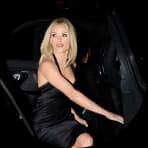
“I wouldn’t say that those girls represent the church as a whole.”
— Witney Carson, Dancing with the Stars professional and practicing Latter-day Saint, who says she was approached to join the cast and declined — to PEOPLE, September 2026. Image: @witneycarson Instagram
She also called herself a fan. Both things can be true, and the data suggests they are.
The show itself keeps score of its cast’s religiosity — in one Season 4 exchange, a cast member stands by having called another too Mormon for her (S4 E3). We decline to keep that score. What can be reported is what cast members have publicly declared about their own standing: several have described stepping back from activity or belief, one has described struggling and wanting to return (S4 E2), and in April 2026 Taylor Frankie Paul announced on Instagram that after being born and raised in the faith, “it’s time to detach myself from it” — while saying she still believes in Christ and will sometimes attend with family (Variety).PUBLIC CLAIM
In Their Own Words: Where the Cast Stands

Taylor Frankie Paul
Self-declared
Detached(her word)
Announced she is detaching from the church; says she still believes in Christ and will at times attend with family.
Instagram, Apr 5, 2026; via Variety · announced show exit Sept 21, 2026
Image Source: @taylorfrankiepaul Instagram

Jen Affleck
Self-declared
Practicing
Describes herself as among the most observant of the cast and has discussed wearing garments during filming as a personal commitment.
Interviews, 2024–present; incl. Women’s Health
Image Source: @jenniferlaffleck Instagram
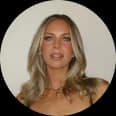
Mayci Neeley
Self-declared
Practicing
Describes herself as active in the church and says she holds a temple recommend.
The Viall Files podcast, Sept 2024
Image Source: @maycineeley Instagram

Jessi Draper
Self-declared
Left
Describes herself as the least religious of the cast, having left the church in her twenties.
Press interviews, 2024–25
Image Source: @_justjessiiii Instagram

Mikayla Matthews
Self-declared
Not practicing
Has said she had not been an active member for about a decade.
The Viall Files podcast, Sept 2024 · exited the show Sept 14, 2026
Image Source: @mikayla__matt Instagram

Whitney Leavitt
Press-documented
Reported practicingUNCONFIRMED
Reported as a current member of the church; ME has not located a direct first-person statement of current standing.
Multiple outlets, 2024–26
Image Source: @whitleavitt Instagram

Miranda Hope
Press-documented
Reported stepped awayUNCONFIRMED
Reported as having stepped away from the faith; ME has not located a direct first-person statement of current standing.
Multiple outlets, 2025–26
Image Source: @miranda__hope Instagram

Layla Taylor
No clear public statement
Unclear
Reported as a convert to the faith; no clear public statement of current standing located.
Image Source: @laylaleannetaylor Instagram
And on the show itself: one cast member describes struggling with faith and wanting to return to church attendance, possibly with different beliefs (S4 E2); another openly weighs whether to continue attending (S4). Per this article’s citation policy, show dialogue carries season and episode only.
The activity-status column restates each person’s own declared standing in their own or near-verbatim terms — it is not ME’s assessment, and all statuses render in one neutral style because ME does not rank them. Statuses are self-declared or press-documented exactly as labeled; ME infers nothing from on-camera behavior, clothing, or consumption. Departure announcements are reported without attributed cause. Chips show standing with the church; show-cast changes are noted in the source lines, current as of Sept 21, 2026.
Now the denominator. Eight women, most publicly distanced from the faith to some degree, curated for television by producers and by themselves. Church membership records tell a different story at scale: across 25 years, central non-death departures from the rolls run to roughly 350,792 people — on the order of one in a thousand members per year, consistent with the Church’s own 2016 public characterization.VERIFIED — see The Ledger
One in a Thousand, Drawn to Scale
Each dot is one Church member; the highlighted dot is the approximate annual rate of central non-death departure from membership records (~1 per 1,000 members per year, 25-year average). Derived figure — methodology and sourcing in The Ledger.
A Sample of Eight Is Not a Measurement
The show’s cast
8 women, selected for television
Church membership
~17 million records worldwide
Illustrative scale only (bar lengths not proportional — a proportional bar for the cast would be invisible at any size). Membership figure: Church-reported statistical report; see The Ledger for handling of records vs. activity.
A reality cast is a sample of eight, selected for drama. It is not a measurement of anything. Where no instrument measures the comparison a viewer is invited to draw — this is what Mormon women’s lives look like — the honest verdict is the one we give it.DATA GAP
For what independent instruments do measure about Latter-day Saint life outcomes, see our Outcomes Data Hub.
But the title’s own question — how Mormon? — does have a measurable answer, and it runs opposite the cast’s profile. By every instrument that measures religious practice, Mormons are America’s most devout religious group.VERIFIED — Pew RLS 2023–24
So, How Devout Are Actual Mormons?
88%
attend church at least monthly – the highest rate of any major U.S. religious group (vs. 68% of all U.S. adults) Pew RLS 2023–24
76%
of Latter-day Saint Millennials and Gen Z attend monthly – more than any other major U.S. faith’s young adults Pew RLS 2023–24
73%
pray daily, vs. 44% nationally Pew RLS 2023–24
63%
read scripture at least weekly – the highest rate measured (56% even among Millennials and Gen Z) Pew RLS 2023–24 · BYU Studies 2026
80%
of parents pray or read scripture with their children, vs. 58% of Christians nationally Pew RLS 2023–24
Not just self-reports: University of Chicago cell-phone geolocation research independently places Latter-day Saints among America’s highest weekly church attenders. Sources: Pew Religious Landscape Study 2023–24; BYU Studies synthesis (2026); Pope geolocation study. Practice metrics only – wellbeing findings live at /outcomes with their required context.
The Verdict Table
Claim on the show
Verdict
Checked against
Claim on the show
Verdict
Checked against
Claim on the show
Verdict
Checked against
Claim on the show
Verdict
Checked against
Claim on the show
Verdict
Checked against
Claim on the show
Verdict
Checked against
Claim on the show
Verdict
Checked against
Claim on the show
Verdict
Checked against
Claim on the show
Verdict
Checked against
Claim on the show
Verdict
Checked against
Claim on the show
Verdict
Checked against
Frequently Asked Questions
Do Mormons drink soda or caffeine?
Yes. The prohibition in the Word of Wisdom covers coffee and tea (plus alcohol and tobacco), not caffeine. The Church clarified this directly in 2012. Utah’s dirty-soda shops are a product of that distinction.
What are Mormon garments?
Underclothing worn by adult members who have been endowed in a temple, as a private reminder of covenants made there. Current guidance describes wearing them throughout life as a sacred privilege, with provisions for medical circumstances.
Is soft swinging a Mormon thing?
No — as a claim about the faith it is false: the teachings explicitly reserve sexual relations for marriage. The record documents one friend group’s publicly claimed conduct; no wider practice has ever been evidenced.
Can Mormons get divorced?
Yes. Civil divorce carries no membership penalty, and a process exists to cancel temple sealings. Cultural stigma described by cast members stands as their experience, not as Church policy.
Do Mormon women have to obey their husbands?
No. The Church’s foundational family document states spouses are obligated to help one another as equal partners, and Church teaching explicitly rejects unilateral male decision-making, calling domineering conduct unrighteous dominion.
Do Mormons actually practice their religion?
At the highest rates measured of any major U.S. religious group: 88% attend church at least monthly (vs. 68% of all U.S. adults), 73% pray daily, 63% read scripture weekly, and 80% of parents pray or read scripture with their children. University of Chicago geolocation research independently corroborates the attendance self-reports.
What is a Mormon baby blessing, and who can perform one?
A naming and blessing of an infant, typically performed by the father — who must be a worthy holder of the Melchizedek Priesthood (General Handbook 18.6). The bishop who oversees it is an unpaid lay minister, not a career cleric.
Is the cast of The Secret Lives of Mormon Wives still Mormon?
It varies, and this article reports only what cast members have publicly declared about themselves. Two describe themselves as practicing; several have described stepping back from practice or belief; one announced in April 2026 that she was detaching from the church while continuing to believe in Christ — and, separately, two cast members announced in September 2026 that they were leaving the show. Where no public statement exists, we make no inference.
Methodology
“Every claim” means every religious claim about doctrine or practice made, spoken or implied, on the show’s aired episodes and official trailers — not interpersonal storylines, and not the private conduct or sincerity of any person. Show dialogue is cited by season and episode; a small number of on-show statements are attributed by name or household role where the speaker’s identity has been editorially confirmed, with identity and exact wording verified against aired footage before publication. Cast members are otherwise not named on quotes. Off-show public statements (press interviews, public social posts) are attributed normally. Show dialogue was verified against production transcripts; episode timestamps are confirmed against aired footage before publication.
Claims are stamped VERIFIED, DOCUMENTED, PUBLIC CLAIM, WITNESS, CONTESTED, NEVER VERIFIED, or DATA GAP. We test claims, not hearts.